3rd Grade Verb Tenses: Past, Present, and Future Worksheet
Verbs change to show time. Choose the past, present, or future form that fits each sentence.
- Homework
- Review
- Test Prep
- Centers
Download the Free Printable PDF
No sign-up required. Clean, low-ink US Letter format.
- Grade
- 3rd Grade
- Subject
- Grammar
- Skill
- Verbs
- Topic
- past, present, and future verb tenses
- Difficulty
- Standard
- Time
- 15 minutes
- Pages
- 2 (incl. answer key)
- Format
- Printable PDF (US Letter)
- Answer key
- Included
- Best for
- homework, review, test prep, centers
Worksheet details
What This Worksheet Practices
Students will identify and form the past, present, and future tense of verbs to fit the meaning of a sentence.
- Telling past, present, and future apart
- Forming regular and irregular past tense
- Using 'will' for the future
Inside This Printable
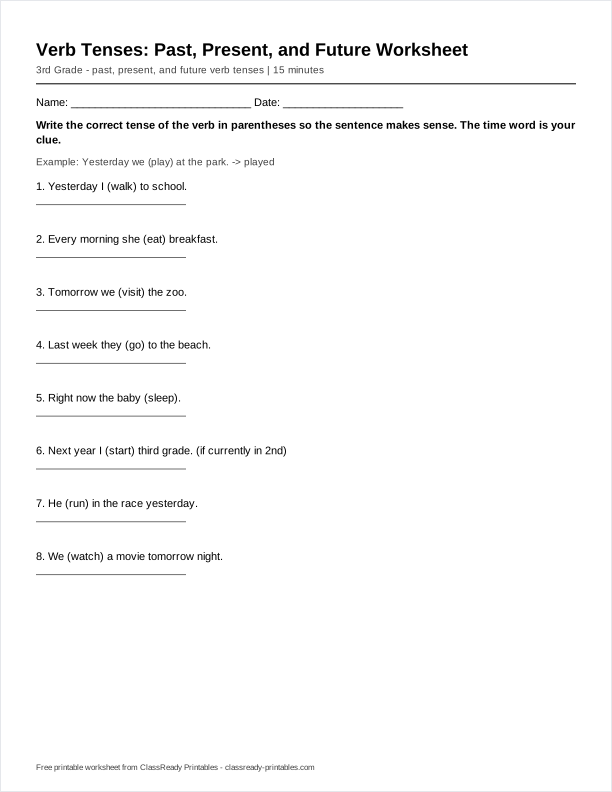
Student directions: Write the correct tense of the verb in parentheses so the sentence makes sense. The time word is your clue.
Worked example
Yesterday we (play) at the park. -> played
Sample questions
- Yesterday I (walk) to school.
- Every morning she (eat) breakfast.
- Tomorrow we (visit) the zoo.
The PDF contains 8 practice questions plus 1 challenge question.
Worksheet Preview
One verb, three times
Verbs change form to show when something happens: walked (past), walk (present), will walk (future). Time words are the clue — yesterday signals past, now or every day signals present, and tomorrow signals future. Watch for tricky irregular verbs like go/went and eat/ate.
The three tenses
| Tense | When | Form | Example |
|---|---|---|---|
| Past | already happened | -ed (or irregular) | We walked home. |
| Present | happening now / habit | base or -s | I walk every day. |
| Future | will happen later | will + verb | We will walk tomorrow. |
Time-word signals
- Past: yesterday, last week, ago, earlier
- Present: now, every day, always, today
- Future: tomorrow, next week, soon, later
Worked example
“Yesterday, the class ___ a field trip.” (take / took / will take) Yesterday = past → took (irregular past of take).
How to solve each item
For each sentence, find the time word, then ask did it already happen, is it happening now, or will it happen later? Match that to the verb form. If no time word, decide from the meaning of the sentence.
Guided practice (try before the worksheet)
- “Right now, she ___ her lunch.” (eat / ate / will eat) → eats
- “Tomorrow we ___ the museum.” (visit / visited / will visit) → will visit
- “Last night they ___ a movie.” (watch / watched / will watch) → watched
Why it matters
Verb tense is how writers show sequence and time — readers rely on it to follow a story. Using the right tense keeps your writing clear and consistent.
Next steps
Builds on action verbs and leads into irregular past tense verbs.
👩🏫 Teacher note
Anchor each tense to a time word: yesterday (past), now/every day (present), tomorrow (future). Watch for irregular verbs like go/went and eat/ate.
🏠 Parent note
Ask 'Did it already happen, is it happening now, or will it happen later?' to choose the tense.
Common Mistakes to Watch For
- Using 'will' but also changing the verb (will went)
- Forgetting irregular past tense (go/went, eat/ate)
Answer Key
The correct verb form is given for each sentence.
⬇ Download Answer Key (PDF)Learn this skill first
Take the free lesson on verbs — worked examples and practice exercises, then come back to this worksheet.
Related Worksheets
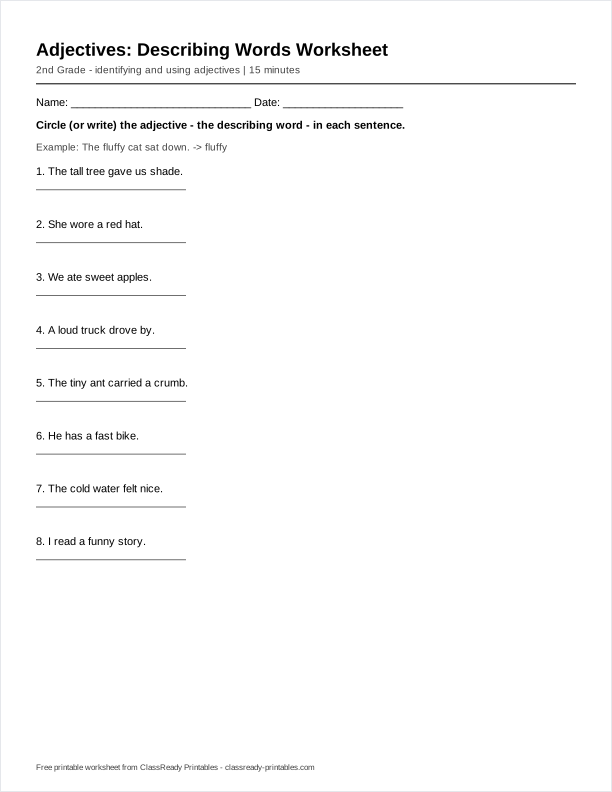
Adjectives: Describing Words Worksheet
An adjective is a describing word — it tells more about a noun. Find the adjective in each sentence.
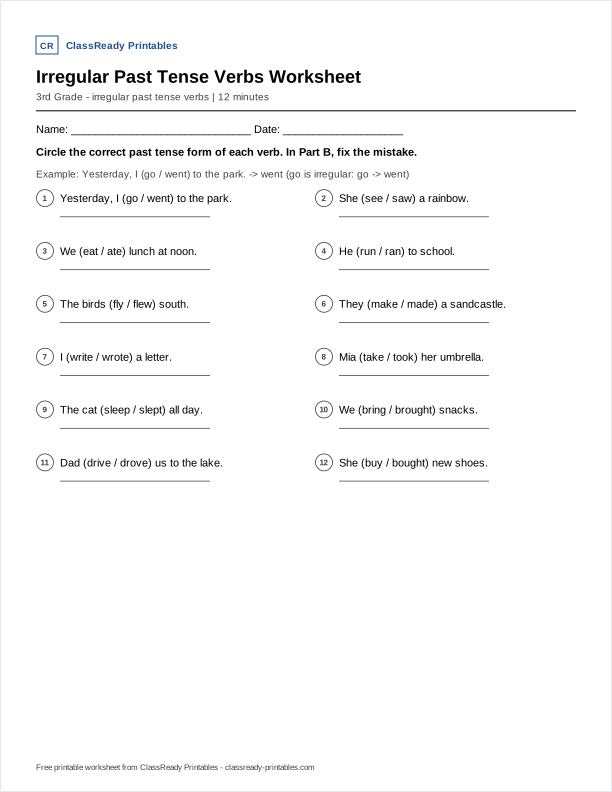
Irregular Past Tense Verbs Worksheet
Irregular verbs don't take -ed. Their past tense changes the whole word: go → went, see → saw. Choose the correct form.
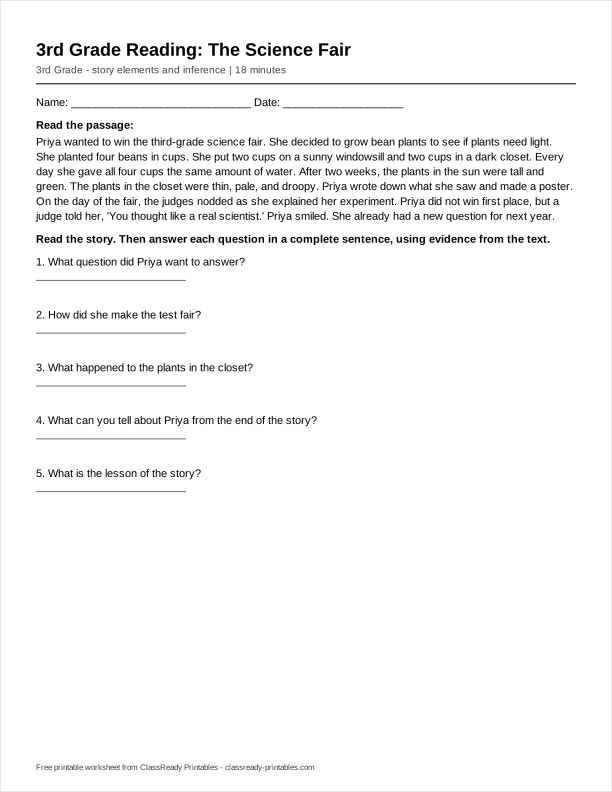
3rd Grade Reading: The Science Fair
Read a story about a science fair and answer questions about the characters, the problem, and what you can infer.
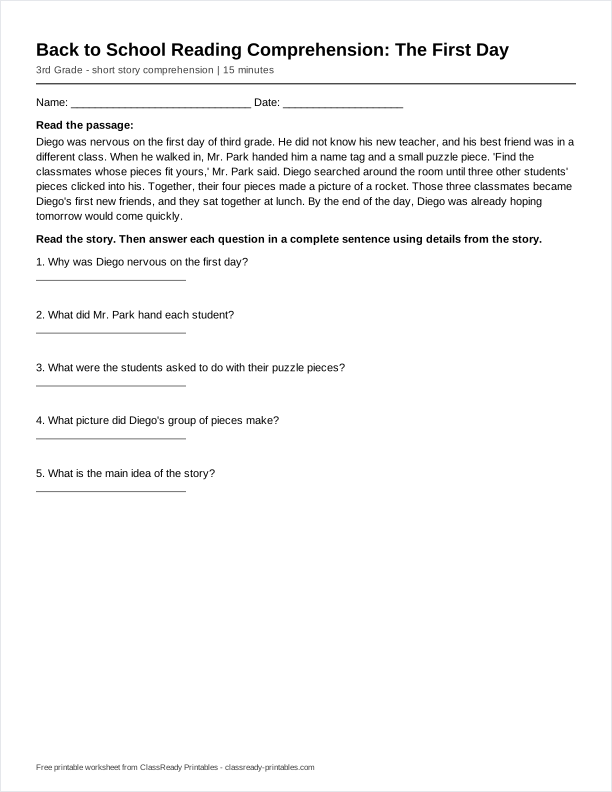
Back to School Reading Comprehension: The First Day
Read an original back-to-school story and answer questions about the characters, problem, and solution.
Frequently Asked Questions
Is this worksheet free to download?
Yes. You can download and print this worksheet for free, with no sign-up required.
Does it come with an answer key?
Yes — a complete answer key is included.
Original & reviewed. Every worksheet is created in-house from a grade-level skill brief, checked for a correct answer key, and reviewed for grade-appropriateness. Our editorial policy.