Word Problems — 2nd Grade Lesson
Students will solve addition and subtraction word problems to 100 and explain their thinking.
2nd Grade · Word Problems · ~25 min lesson
What is a word problem?
A word problem is a math question told as a story. The hard part isn’t the arithmetic — it’s figuring out which arithmetic to do.
Step 1: Read and picture it
Read the whole problem and picture what happens in your head. Is something being joined together, taken away, or compared?
Step 2: Circle the numbers, underline the question
Find the numbers and know exactly what the problem is asking.
“Sara has 25 stickers. She gets 10 more. How many does she have now?”
Step 3: Look for key words
| Key words | Operation |
|---|---|
| in all, total, more, together, gets, finds | addition |
| left, fewer, take away, remain, how many more | subtraction |
Step 4: Solve and check
Do the math, then read the problem again to check your answer makes sense.
25 + 10 = 35 stickers
Addition or subtraction — a quick test
- Groups come together → add
- Something is taken away → subtract
- Comparing “how many more / fewer” → subtract
How to practice at home
- Turn everyday life into problems: “We have 3 apples and buy 5 more — how many total?”
- Draw it: sketch the story before solving.
- Key word hunt: underline words that hint at the operation.
- Write your own: make up a story problem for 12 + 8.
Practice with the exercises above, then download these free printable worksheets:
Practice Exercises
Try these on your own, then reveal the answer to check.
Sara has 25 stickers. She gets 10 more. How many does she have?
💡 Getting more means add: 25 + 10.
There are 60 fish in a tank. 20 swim away. How many are left?
💡 Swim away means subtract: 60 - 20.
Key word 'in all' usually means what operation?
💡 It means combining groups.
Key word 'how many are left' usually means what operation?
💡 It means taking away.
Tom has 18 marbles. His friend gives him 4. How many does Tom have now?
💡 Gives him means add: 18 + 4.
A box has 45 crayons. You take out 15. How many remain?
💡 Take out means subtract: 45 - 15.
Printable Worksheets
Put this lesson into practice with free, printable worksheets — each with an answer key.
Before You Start
- Addition and subtraction within 100
- Reading simple sentences
Common Mistakes to Watch For
- Adding whenever they see a number, without reading what happens
- Missing a step in problems that need more than one operation
What to Learn Next
Browse more Word Problems worksheets or explore all 2nd Grade worksheets.
Related Worksheets
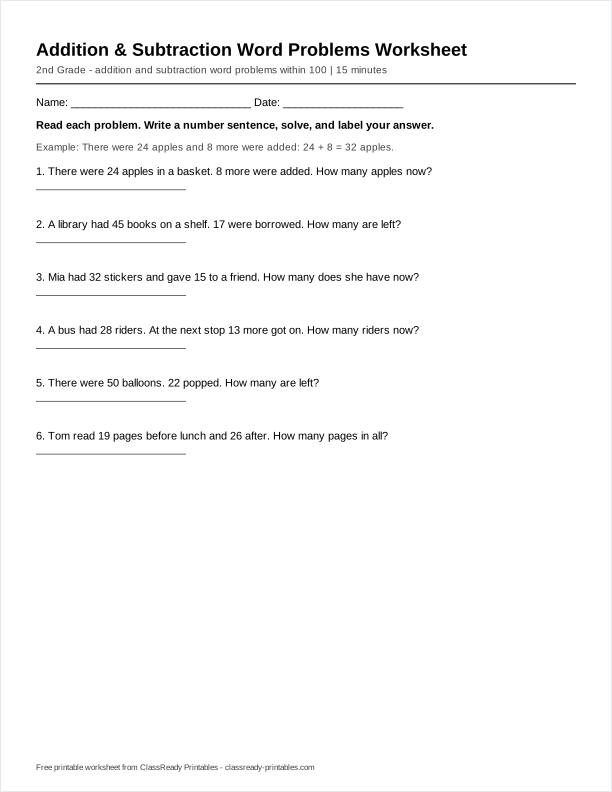
Addition & Subtraction Word Problems Worksheet
Read each problem, decide whether to add or subtract, then solve and label the answer.
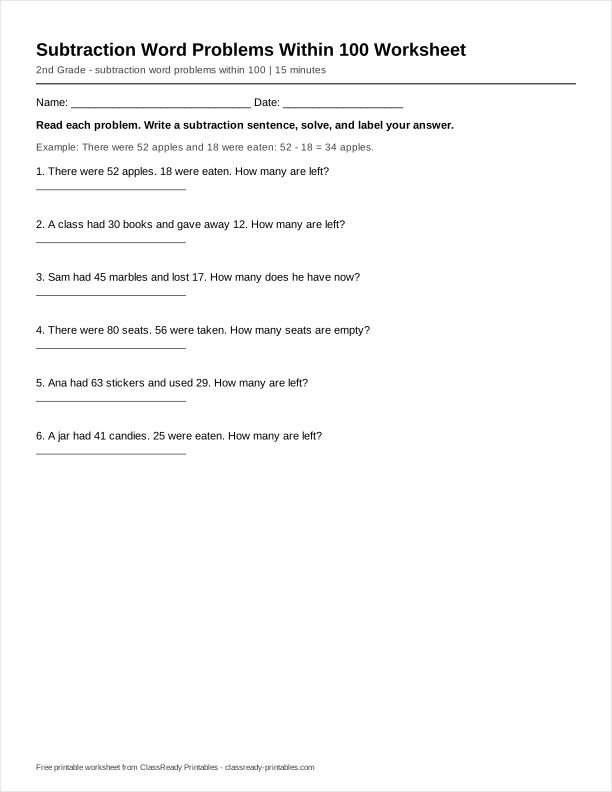
Subtraction Word Problems Within 100 Worksheet
Solve subtraction word problems within 100 — both take-away and 'how many more' comparisons.
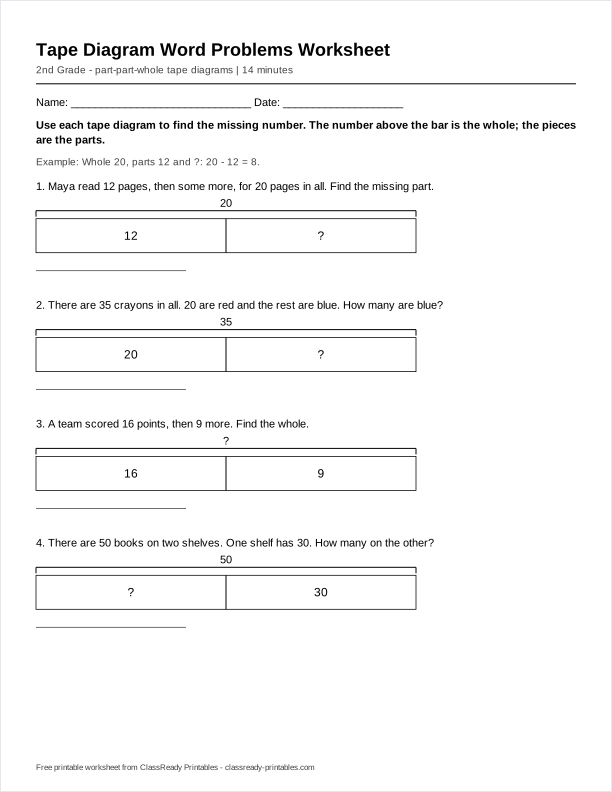
Tape Diagram Word Problems Worksheet
Use each tape diagram (bar model) to find the missing part or whole, then solve the problem.
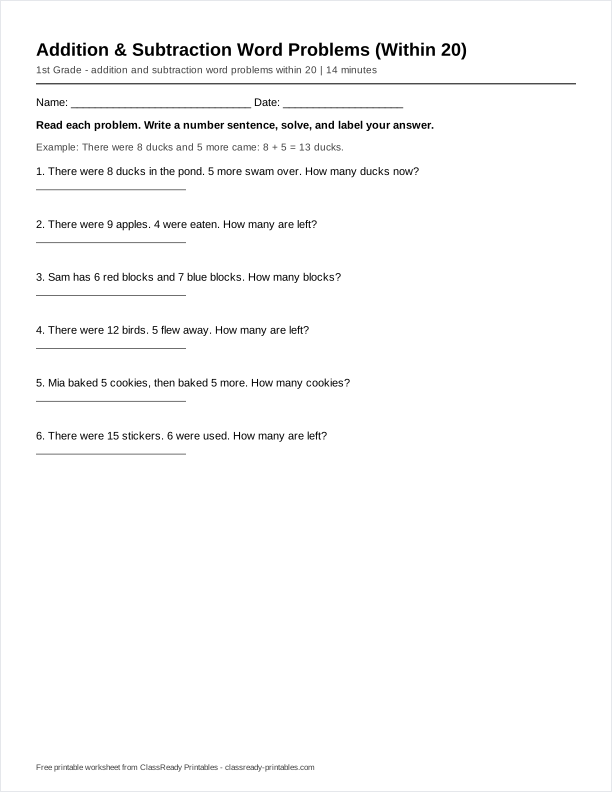
Addition & Subtraction Word Problems (Within 20)
Solve simple addition and subtraction word problems with answers within 20.
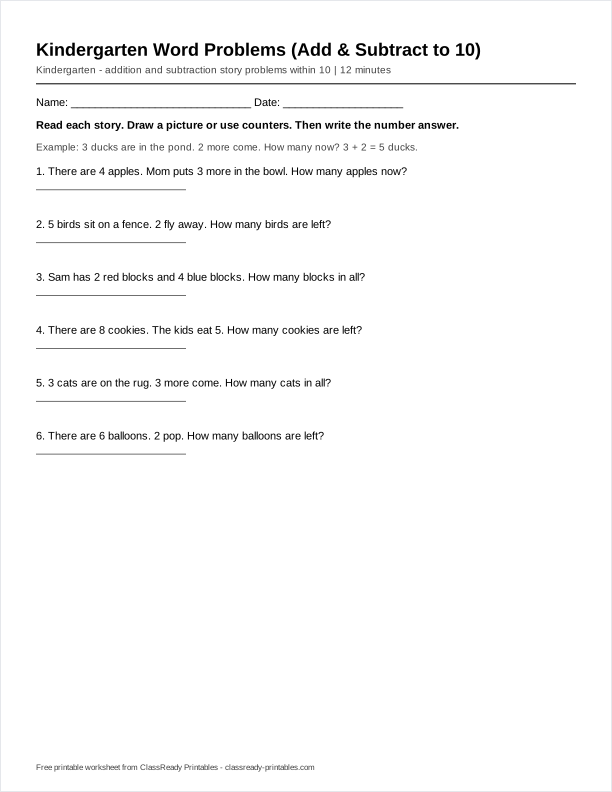
Kindergarten Word Problems (Add & Subtract to 10)
Read (or listen to) each short story and add or take away to find the answer. Numbers stay within 10.
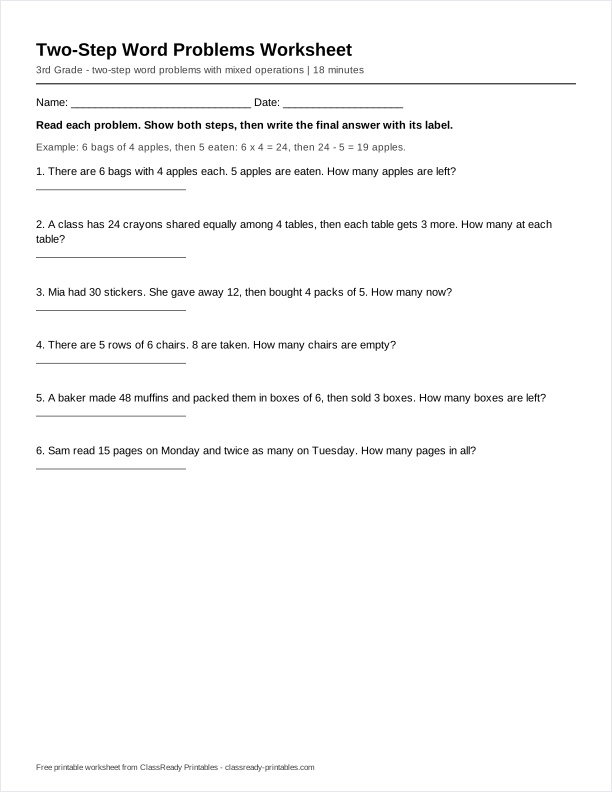
Two-Step Word Problems Worksheet
Solve two-step word problems that mix adding, subtracting, multiplying, and dividing.
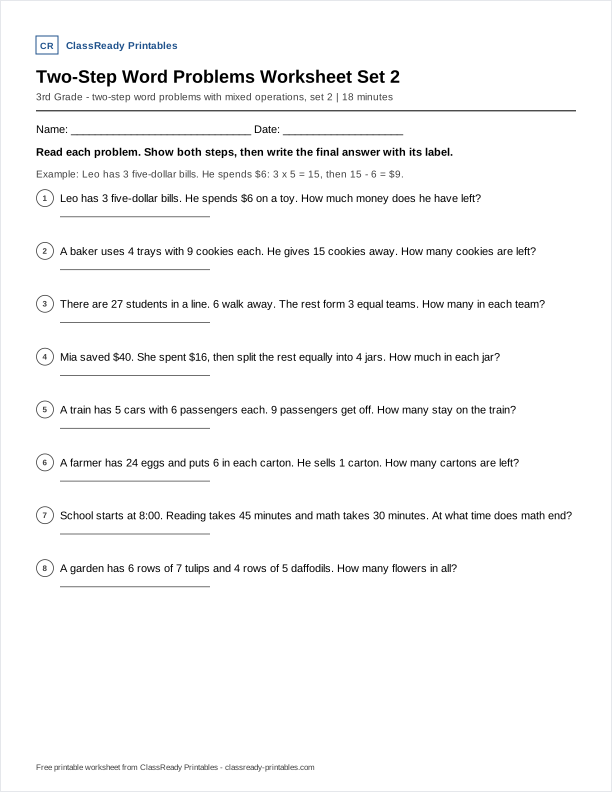
Two-Step Word Problems Worksheet Set 2
Set 2 adds money, time, and measurement to two-step problems. Find the first answer, then use it for step two.
Frequently Asked Questions
How do I know whether to add or subtract in a word problem?
Read what is happening, not just the numbers. Joining groups means add (more, in all, total). Taking away or comparing means subtract (left, fewer, how many more).
What is the CUBES strategy?
Circle the numbers, Underline the question, Box the key words, Evaluate (decide the operation), and Solve and check. It slows readers down so they solve the right problem.
Original & reviewed. Every worksheet is created in-house from a grade-level skill brief, checked for a correct answer key, and reviewed for grade-appropriateness. Our editorial policy.