Letter Tracing — Kindergarten Lesson
Students will trace and write uppercase and lowercase letters using correct starting points and stroke order.
Kindergarten · Letter Tracing · ~15 min lesson
Why tracing first?
Tracing builds the muscle memory your hand needs to write. Practicing the strokes over and over makes real writing easier and neater.
The golden rule: start at the top
Almost every letter starts at the top and moves down. Starting letters from the bottom is the most common bad habit — and the hardest to break.
Write A: slant down, slant down, cross in the middle — starting from the top each time.
The right stroke order
Each letter is made of a few simple strokes. Trace them in the right order:
- A = 3 strokes (two slants + one cross)
- B = 3 strokes (one tall line + two bumps)
- O = 1 stroke (one circle, counterclockwise)
Uppercase and lowercase
- Uppercase letters are tall — from the top line to the bottom line.
- Lowercase letters are smaller — from the middle line to the bottom line.
The practice sequence
- Finger trace the letter (feel the shape).
- Pencil trace over the dashed letter.
- Write it in the blank line without the model.
- Check against the example.
How to practice at home
- Sand and shaving cream: trace letters with a finger for sensory practice.
- Big movements: write letters in the air with a whole arm.
- One letter at a time: master a few letters before moving on.
- Correct the grip: a relaxed tripod grip makes tracing much easier.
Practice with the exercises above, then download these free printable worksheets:
Practice Exercises
Try these on your own, then reveal the answer to check.
Do most uppercase letters start at the top or the bottom?
💡 Start at the top and pull down.
How many strokes to write an uppercase A?
💡 Two slanting lines and one across.
Which letter do you write with a circle first: a or b?
💡 A small a starts with a circle.
Uppercase or lowercase letters are usually written smaller?
💡 Lowercase letters fit between the midline and the bottom.
What should you always do before writing: look at the model or guess?
💡 Copy the example first.
Which direction do we draw a circle: clockwise or counterclockwise (most handwriting programs)?
💡 Most programs draw circles counterclockwise.
Printable Worksheets
Put this lesson into practice with free, printable worksheets — each with an answer key.
Before You Start
- Holding a pencil
- Recognizing letter shapes
Common Mistakes to Watch For
- Forming letters from the bottom instead of the top
- Tracing over the shape without lifting to form distinct strokes
What to Learn Next
Browse more Letter Tracing worksheets or explore all Kindergarten worksheets.
Related Worksheets
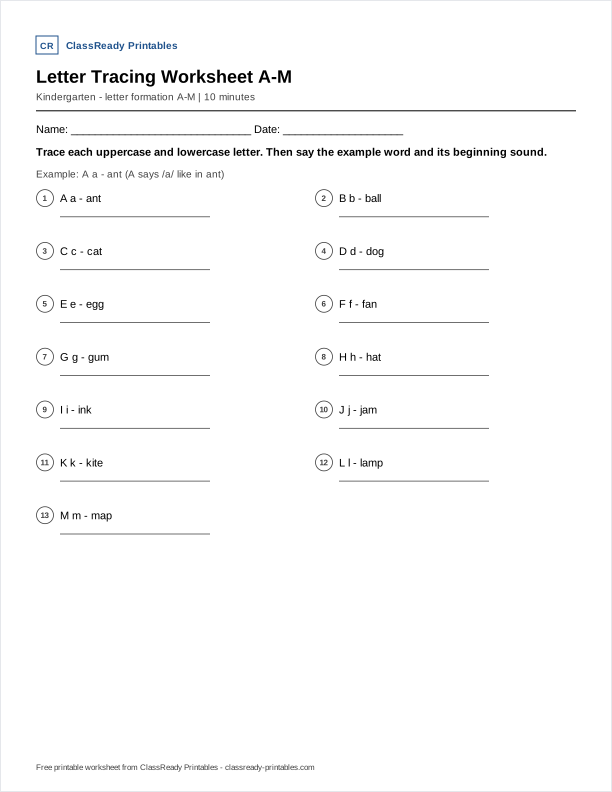
Letter Tracing Worksheet A–M
Trace each letter — the big uppercase first, then the small lowercase. Say the sound and the example word out loud.
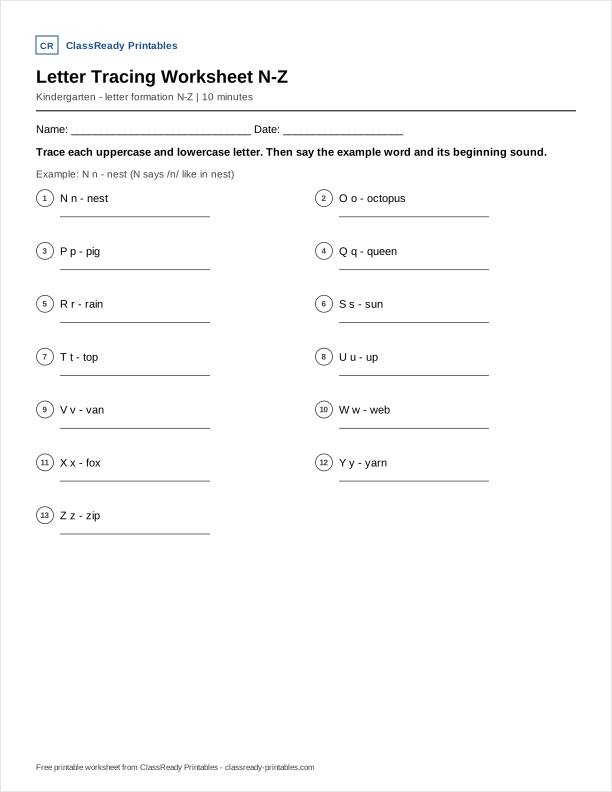
Letter Tracing Worksheet N–Z
Trace each letter — the big uppercase first, then the small lowercase. Say the sound and the example word out loud.
Frequently Asked Questions
Why does letter tracing matter in kindergarten?
Tracing builds the muscle memory for letter formation. Starting letters correctly at the top with the right strokes makes writing faster and neater — and prevents bad habits later.
Should my child trace or write freehand?
Use the sequence: trace with a finger, trace with a pencil, then write without the model. Move to freehand once tracing is comfortable — but keep checking the starting point.
Original & reviewed. Every worksheet is created in-house from a grade-level skill brief, checked for a correct answer key, and reviewed for grade-appropriateness. Our editorial policy.