4th Grade Comparing Fractions Worksheet
Compare two fractions with <, >, or = — and learn to reason about the size of the pieces, not just the digits.
- Homework
- Review
- Test Prep
- Tutoring
Download the Free Printable PDF
No sign-up required. Clean, low-ink US Letter format.
- Grade
- 4th Grade
- Subject
- Math
- Skill
- Fractions
- Topic
- comparing fractions
- Difficulty
- Standard
- Time
- 15 minutes
- Pages
- 2 (incl. answer key)
- Format
- Printable PDF (US Letter)
- Answer key
- Included
- Best for
- homework, review, test prep, tutoring
- Standards alignment
- Common grade-level expectations: Compare two fractions with different numerators and denominators and record with <, >, or =.
Worksheet details
What This Worksheet Practices
Students will compare two fractions using <, >, or =, reasoning about size rather than just the numbers.
- Comparing fractions with the same denominator
- Comparing fractions with the same numerator
- Recognizing equivalent fractions when comparing
Inside This Printable
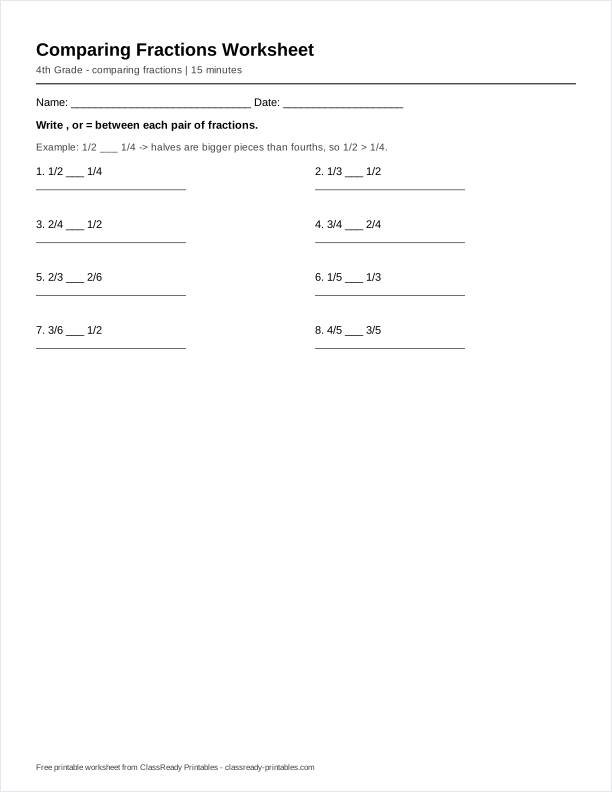
Student directions: Write <, >, or = between each pair of fractions.
Worked example
1/2 ___ 1/4 -> halves are bigger pieces than fourths, so 1/2 > 1/4.
Sample questions
- 1/2 ___ 1/4
- 1/3 ___ 1/2
- 2/4 ___ 1/2
The PDF contains 8 practice questions plus 2 challenge questions.
Worksheet Preview
Bigger numbers, smaller pieces
The hardest idea in comparing fractions is that a bigger denominator does not mean a bigger fraction. Cut a pizza into 8 slices and each slice is smaller than if you cut it into 4. So 1/8 is less than 1/4, even though 8 is more than 4. This worksheet builds the two reliable comparisons before mixing them:
- Same denominator: the larger numerator is larger (3/4 > 2/4).
- Same numerator: the smaller denominator is larger, because the pieces are bigger (1/3 > 1/4).
How to use it
For any pair that causes a pause, draw two fraction bars of the same length and shade each fraction — seeing the lengths side by side settles the comparison instantly. Watch for the equivalent pairs (like 2/4 and 1/2): students who only look at the digits will miss that they are equal. This page pairs naturally with equivalent fractions.
👩🏫 Teacher note
Fold or draw fraction strips for the trickier pairs. Emphasize the rule that with the same numerator, the fraction with the smaller denominator is larger (bigger pieces).
🏠 Parent note
Same bottom number? The bigger top wins. Same top number? The smaller bottom wins, because the pieces are bigger.
Common Mistakes to Watch For
- Assuming a larger denominator means a larger fraction
- Comparing only the numerators when denominators differ
Answer Key
Each answer shows the correct symbol (<, >, or =).
⬇ Download Answer Key (PDF)Learn this skill first
Take the free lesson on fractions — worked examples and practice exercises, then come back to this worksheet.
Related Worksheets
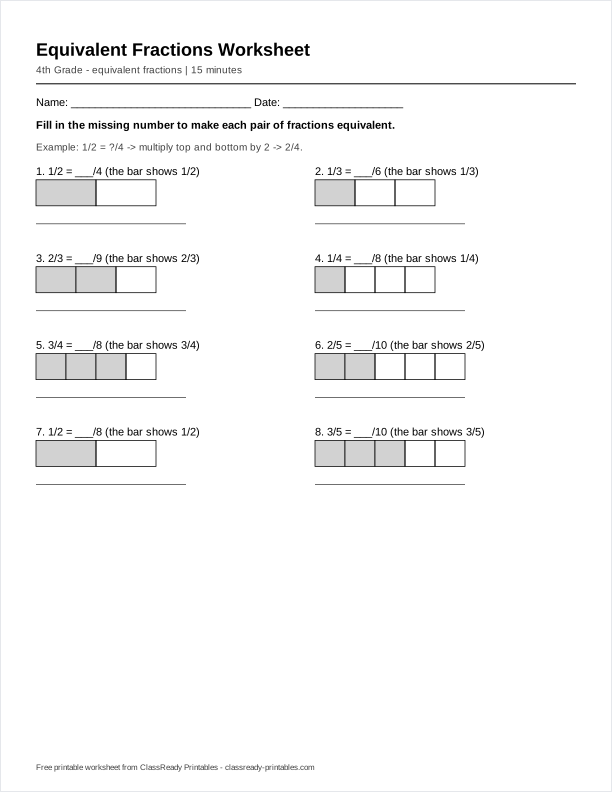
Equivalent Fractions Worksheet
Practice finding equivalent fractions by multiplying the numerator and denominator by the same number.
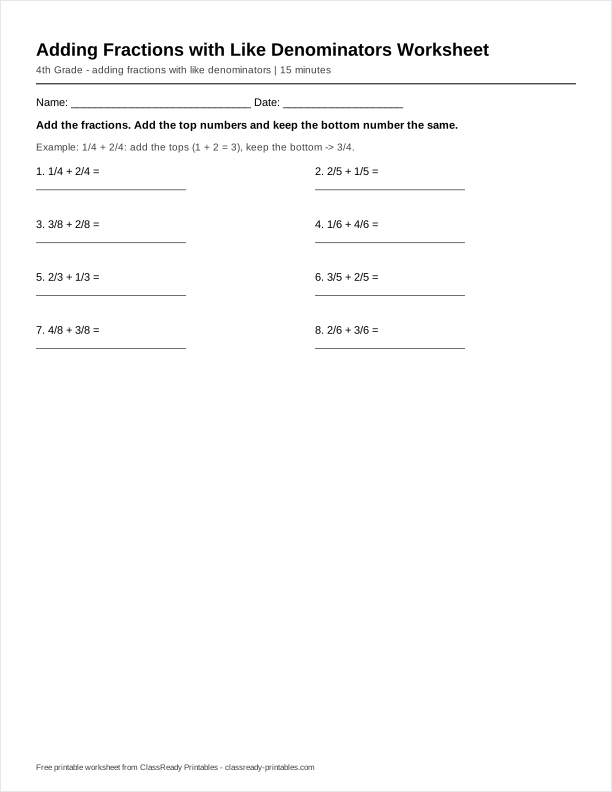
Adding Fractions with Like Denominators Worksheet
Add fractions that share a denominator by adding the top numbers and keeping the bottom number the same.
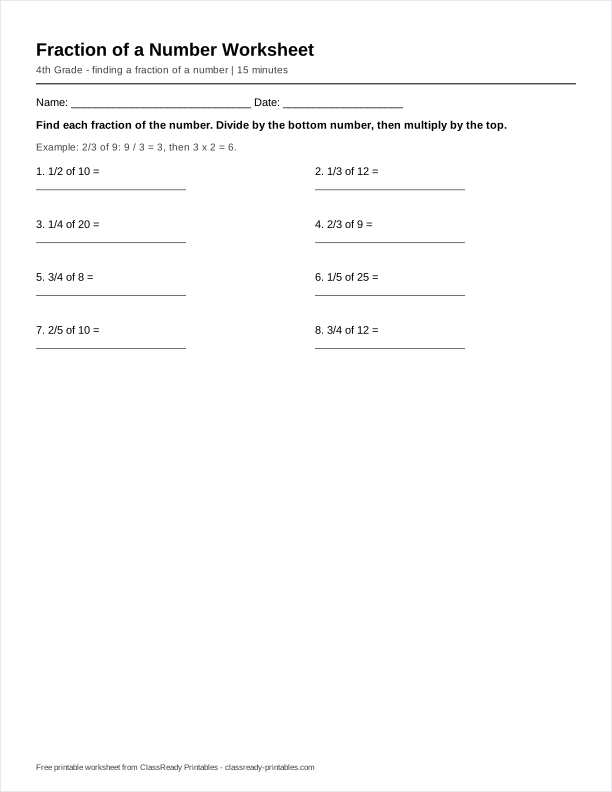
Fraction of a Number Worksheet
Find a fraction of a number by dividing by the denominator, then multiplying by the numerator.
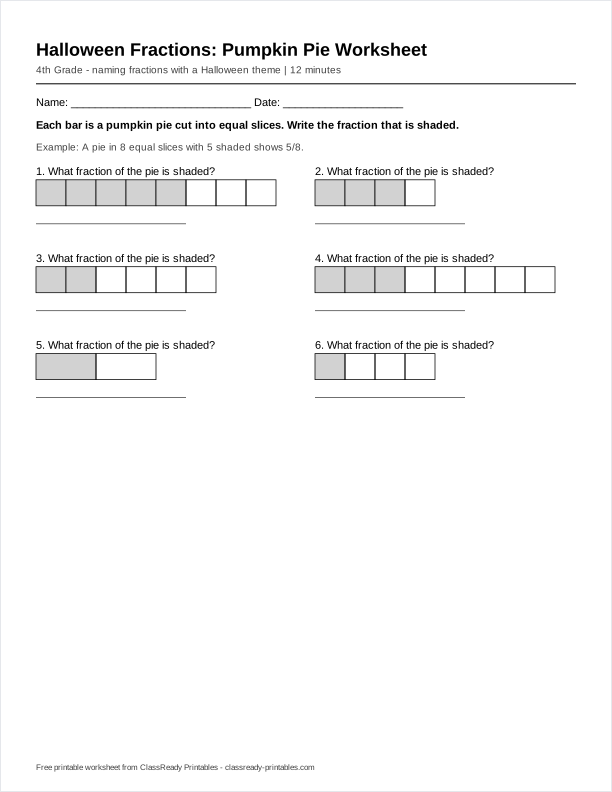
Halloween Fractions: Pumpkin Pie Worksheet
Each bar is a pumpkin pie cut into equal slices. Write the fraction that is shaded.
Frequently Asked Questions
Is this worksheet free to download?
Yes. You can download and print this worksheet for free, with no sign-up required.
Does it come with an answer key?
Yes — a complete answer key is included.
Original & reviewed. Every worksheet is created in-house from a grade-level skill brief, checked for a correct answer key, and reviewed for grade-appropriateness. Our editorial policy.