5th Grade 5th Grade Reading: The Journey of Sea Turtles (Nonfiction)
Read an informational passage about sea turtles and answer main-idea, inference, and author's-purpose questions.
- Homework
- Review
- Test Prep
- Centers
Download the Free Printable PDF
No sign-up required. Clean, low-ink US Letter format.
- Grade
- 5th Grade
- Subject
- Reading
- Skill
- Reading Comprehension
- Topic
- nonfiction comprehension, inference, and author's purpose
- Difficulty
- Standard
- Time
- 22 minutes
- Pages
- 2 (incl. answer key)
- Format
- Printable PDF (US Letter)
- Answer key
- Included
- Best for
- homework, review, test prep, centers
Worksheet details
What This Worksheet Practices
Students will determine the main idea, make inferences, and identify the author's purpose in an informational passage.
- Finding the main idea of nonfiction
- Making inferences with text evidence
- Identifying the author's purpose
Inside This Printable
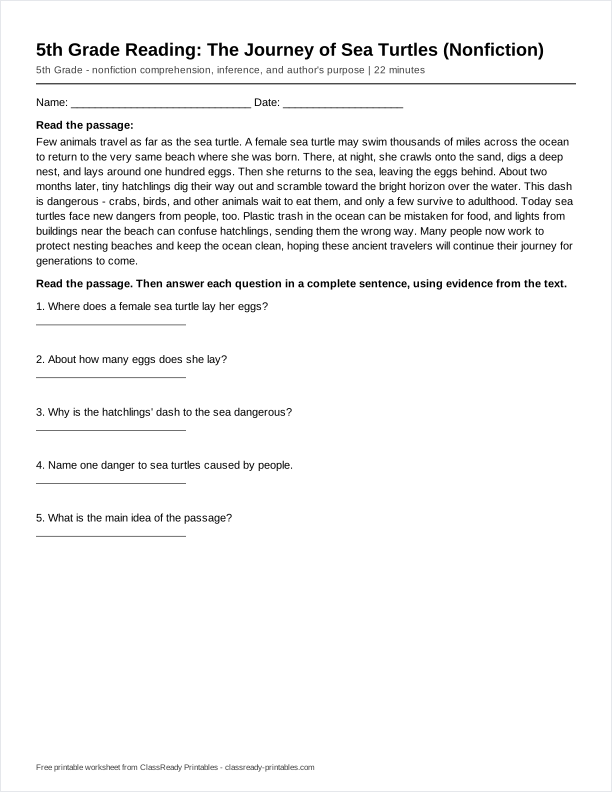
Student directions: Read the passage. Then answer each question in a complete sentence, using evidence from the text.
Sample questions
- Where does a female sea turtle lay her eggs?
- About how many eggs does she lay?
- Why is the hatchlings' dash to the sea dangerous?
The PDF contains 5 practice questions plus 1 challenge question.
Worksheet Preview
Reading nonfiction with a purpose
Fifth-grade nonfiction asks readers to find the main idea, infer from clues, and identify the author’s purpose. This passage informs and persuades — it describes the turtle’s journey, then turns to the dangers people cause and the work to protect them.
The three skills in action
| Skill | What to do | Sample question |
|---|---|---|
| Main idea | What is the whole passage mostly about? | the sea turtle’s life and its dangers |
| Infer | What can you figure out from clues? | turtles face many human-caused threats |
| Author’s purpose | Why was this written? | to inform and persuade readers to help |
Worked example
“Sea turtles swim thousands of miles to return to the beach where they hatched.” What can you infer about sea turtles? → They have a strong sense of direction and a long journey. What clues support that? thousands of miles, return to the same beach.
How to solve each item
Require text evidence for inference and purpose questions, and discuss why the author wrote the passage. For every answer, find the sentence(s) that prove it — quote or paraphrase the clue.
Guided practice (try before the worksheet)
- What is the main idea? → the sea turtle’s journey and the dangers it faces
- What clues show the author wants to persuade? → the section about dangers people cause
- Infer: why must the work to protect turtles continue? → because the dangers are serious
Why it matters
Fifth-grade readers must move from “what does it say” to “what does it mean.” Evidence-based answers build the critical-reading habit that powers middle-school content classes.
Next steps
Builds on the volcanoes passage and pairs with the first airplane passage.
👩🏫 Teacher note
Push for text evidence on inference and purpose questions. The author's purpose here includes informing and raising concern about threats to sea turtles.
🏠 Parent note
Ask 'What is the whole passage mostly about?' and 'Why did the author write it?'
Common Mistakes to Watch For
- Choosing a single fact as the main idea
- Making an inference without text support
Answer Key
Sample answers are provided; wording may vary but should be grounded in the text.
⬇ Download Answer Key (PDF)Learn this skill first
Take the free lesson on reading comprehension — worked examples and practice exercises, then come back to this worksheet.
Related Worksheets
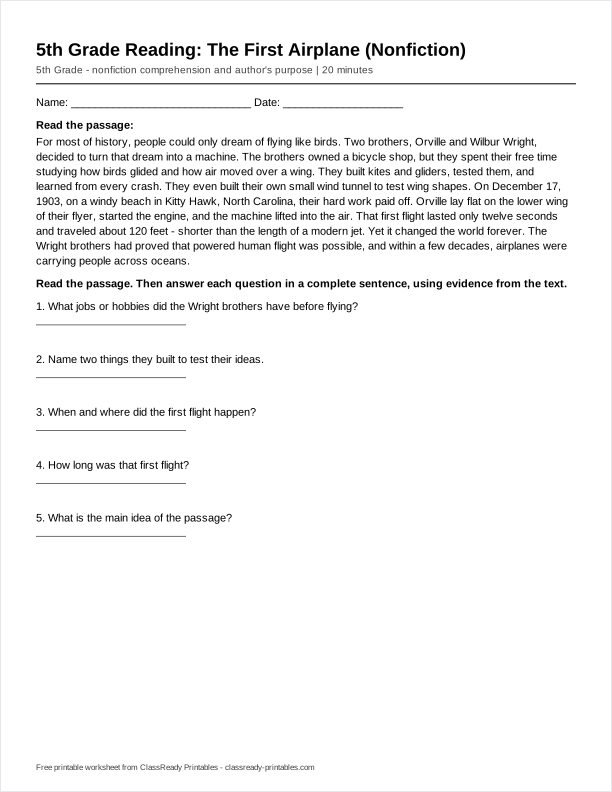
5th Grade Reading: The First Airplane (Nonfiction)
Read an informational passage about the Wright brothers' first flight and answer main-idea, detail, and inference questions.
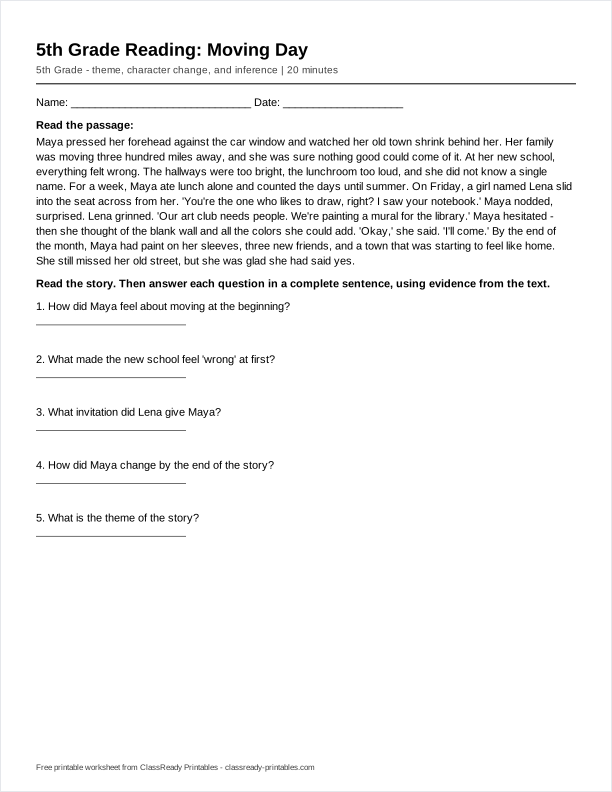
5th Grade Reading: Moving Day
Read a story about a girl moving to a new town and answer questions about how she changes, the theme, and what you can infer.
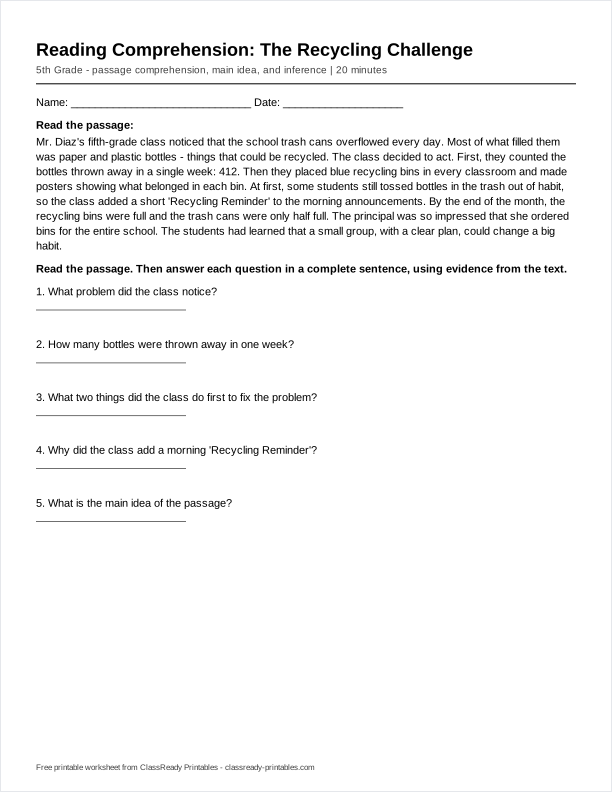
Reading Comprehension: The Recycling Challenge
Read a passage about a class recycling project and answer main-idea and inference questions with text evidence.
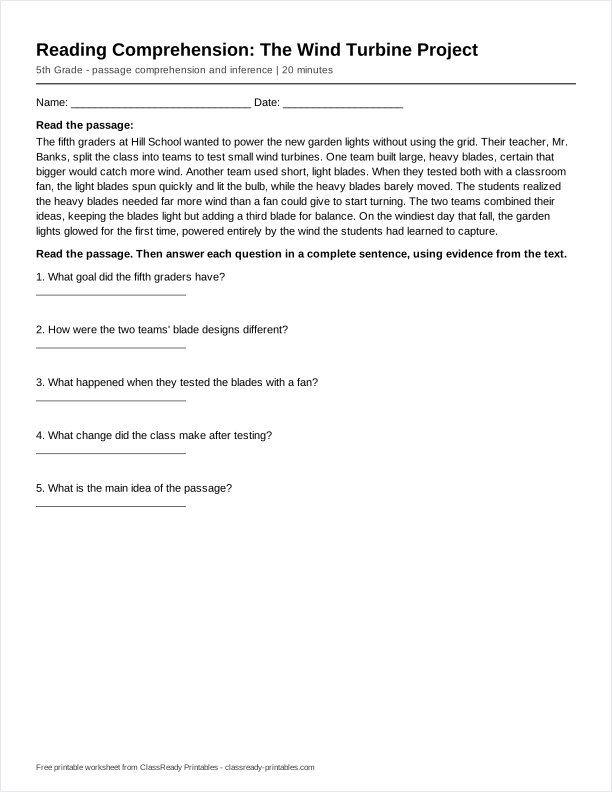
Reading Comprehension: The Wind Turbine Project
Read an original passage about a student engineering project, then answer questions using text evidence.
Frequently Asked Questions
Is this worksheet free to download?
Yes. You can download and print this worksheet for free, with no sign-up required.
Does it come with an answer key?
Yes — a complete answer key is included.
Original & reviewed. Every worksheet is created in-house from a grade-level skill brief, checked for a correct answer key, and reviewed for grade-appropriateness. Our editorial policy.