Measurement and Volume — 5th Grade Lesson
Students will convert between measurement units and calculate the volume of rectangular prisms.
5th Grade · Measurement · ~25 min lesson
Converting units
Converting changes a measurement to a different unit without changing the amount. The trick is knowing the relationship between units.
| Conversion | Equals |
|---|---|
| 1 foot | 12 inches |
| 1 yard | 3 feet |
| 1 hour | 60 minutes |
| 1 quart | 4 cups |
| 1 meter | 100 centimeters |
| 1 kilogram | 1,000 grams |
Multiply or divide?
- Going to a smaller unit → multiply (more of them).
- Going to a larger unit → divide (fewer of them).
2 feet → inches: 2 × 12 = 24 inches 24 inches → feet: 24 ÷ 12 = 2 feet
What is volume?
Volume is how much space a solid takes up. It’s measured in cubic units (cm³, m³).
Volume of a rectangular prism
Volume = length × width × height
A box that is 3 cm by 2 cm by 4 cm:
V = 3 × 2 × 4 = 24 cubic cm
Volume of a cube
A cube has equal sides, so:
V = side × side × side = s³
A cube with sides of 5 cm: 5 × 5 × 5 = 125 cm³.
How to practice at home
- Convert in the kitchen: cups to quarts while cooking.
- Measure boxes: find the volume of real boxes (shoes, shipping).
- Unit races: “who is taller — 5 feet or 60 inches?”
- Estimate volumes before measuring.
Practice with the exercises above, then download these free printable worksheets:
Practice Exercises
Try these on your own, then reveal the answer to check.
How many inches in 2 feet?
💡 1 foot = 12 inches, so 2 × 12.
How many cups in 1 quart?
💡 1 quart = 4 cups.
How many centimeters in 1 meter?
💡 The metric system counts by tens.
A box is 3 cm by 2 cm by 4 cm. What is its volume?
💡 Volume = length × width × height = 3 × 2 × 4.
How many minutes in 2 hours?
💡 1 hour = 60 minutes, so 2 × 60.
A cube has sides of 5 cm. What is its volume?
💡 5 × 5 × 5.
Printable Worksheets
Put this lesson into practice with free, printable worksheets — each with an answer key.
Before You Start
- Multiplication
- 4th grade measurement basics
Common Mistakes to Watch For
- Converting the wrong direction (multiplying when you should divide)
- Forgetting to use all three dimensions for volume (length × width × height)
What to Learn Next
Browse more Measurement worksheets or explore all 5th Grade worksheets.
Related Worksheets
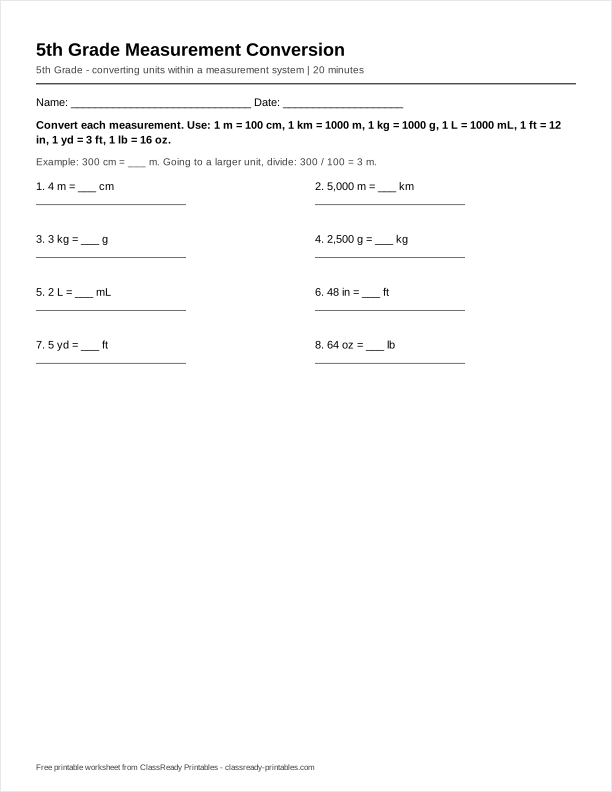
5th Grade Measurement Conversion
Convert metric and customary units in both directions — multiply to go to smaller units, divide to go to larger units.
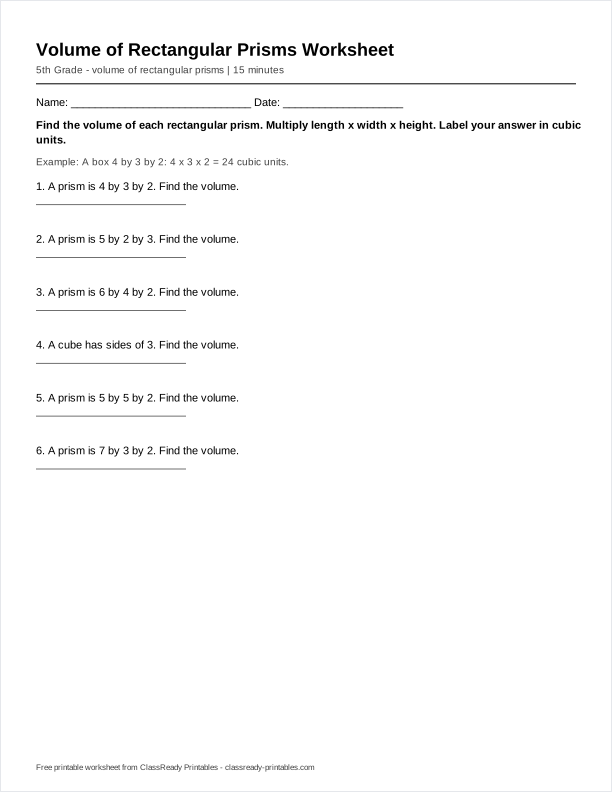
Volume of Rectangular Prisms Worksheet
Find the volume of each rectangular prism by multiplying length x width x height.
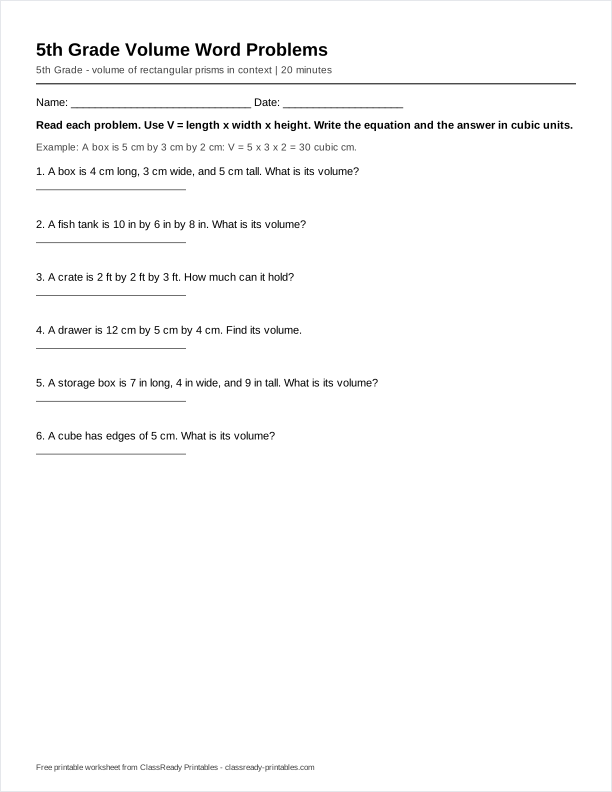
5th Grade Volume Word Problems
Solve real-life problems by finding the volume of rectangular prisms: length x width x height.
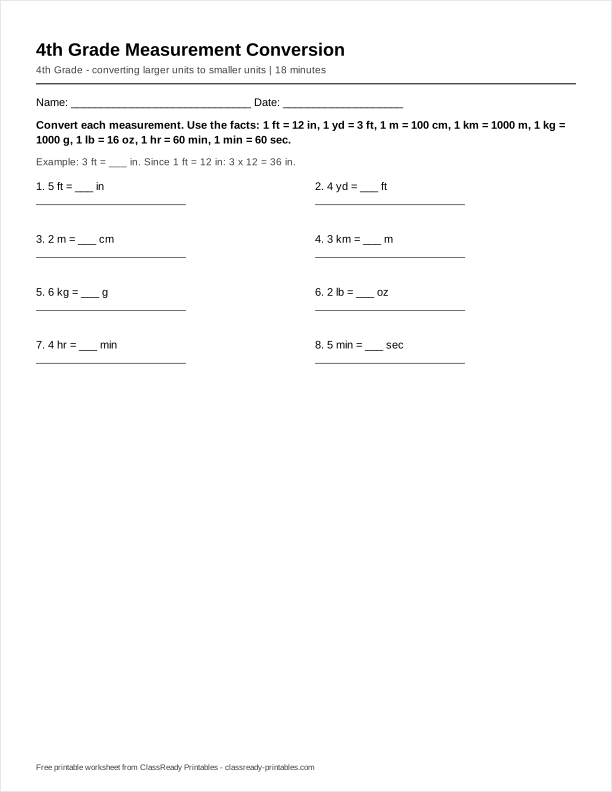
4th Grade Measurement Conversion
Convert larger units to smaller units — feet to inches, kilograms to grams, hours to minutes — by multiplying.
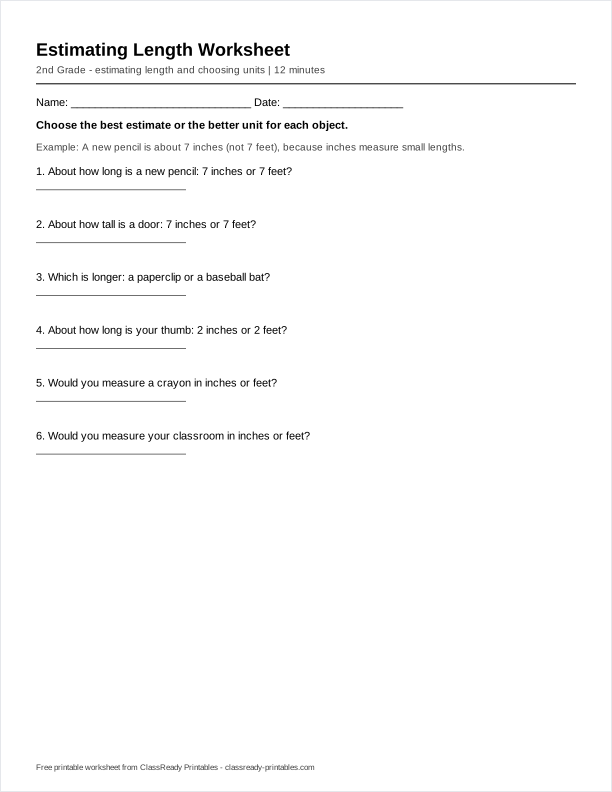
Estimating Length Worksheet
Estimate everyday lengths and pick the unit that makes sense — inches for small things, feet for big ones.
Frequently Asked Questions
What measurement does a 5th grader learn?
Converting between units within the same system (feet to inches, cups to quarts, meters to centimeters) and calculating the volume of rectangular prisms and cubes.
How do I know whether to multiply or divide when converting?
Ask: 'Am I going to a smaller or larger unit?' Going to a smaller unit means more of them, so multiply. Going to a larger unit means fewer of them, so divide. 2 feet → 24 inches (multiply); 24 inches → 2 feet (divide).
Original & reviewed. Every worksheet is created in-house from a grade-level skill brief, checked for a correct answer key, and reviewed for grade-appropriateness. Our editorial policy.