2nd Grade Estimating Length Worksheet
Estimate everyday lengths and pick the unit that makes sense — inches for small things, feet for big ones.
- Homework
- Centers
- Review
- Intervention
Download the Free Printable PDF
No sign-up required. Clean, low-ink US Letter format.
- Grade
- 2nd Grade
- Subject
- Math
- Skill
- Measurement
- Topic
- estimating length and choosing units
- Difficulty
- Easy
- Time
- 12 minutes
- Pages
- 2 (incl. answer key)
- Format
- Printable PDF (US Letter)
- Answer key
- Included
- Best for
- homework, centers, review, intervention
Worksheet details
What This Worksheet Practices
Students will estimate lengths and choose the appropriate unit (inches or feet) for everyday objects.
- Estimating lengths
- Choosing inches or feet
- Comparing which object is longer
Inside This Printable
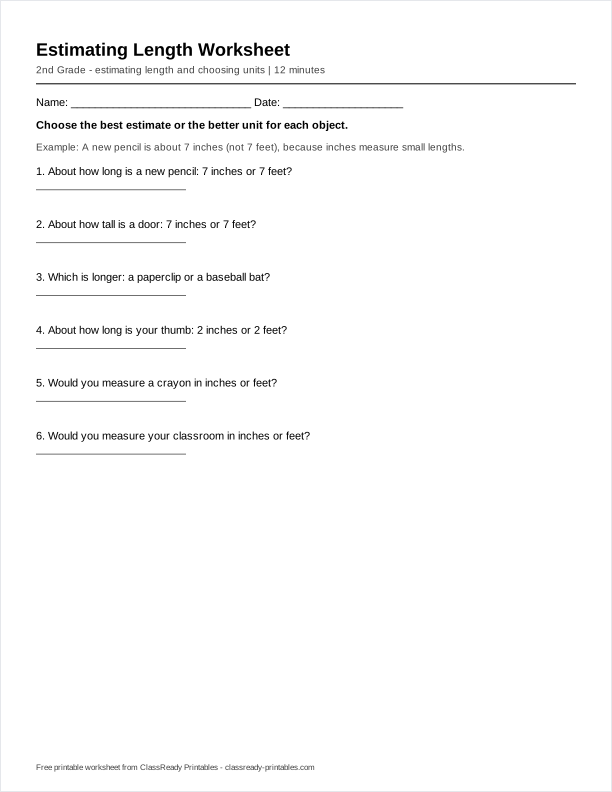
Student directions: Choose the best estimate or the better unit for each object.
Worked example
A new pencil is about 7 inches (not 7 feet), because inches measure small lengths.
Sample questions
- About how long is a new pencil: 7 inches or 7 feet?
- About how tall is a door: 7 inches or 7 feet?
- Which is longer: a paperclip or a baseball bat?
The PDF contains 6 practice questions plus 2 challenge questions.
Worksheet Preview
Estimate first, then measure
Good measurement starts with a sensible estimate and the right unit. Small things — a crayon, a thumb — are measured in inches; big things — a door, a room — in feet. Building benchmark lengths (a paperclip is about an inch, a sheet of paper about a foot) helps students judge whether an answer is reasonable before they ever pick up a ruler.
How to use it
Have students picture a benchmark (paperclip = 1 inch) and decide if the object is closer to inches or feet. Estimating before measuring is the habit that catches wildly wrong measurements later.
👩🏫 Teacher note
Anchor benchmarks: a paperclip is about 1 inch, a sheet of paper about 1 foot. Estimating before measuring builds number sense for measurement.
🏠 Parent note
Small things (a crayon, a thumb) are measured in inches. Big things (a door, a couch) are measured in feet.
Common Mistakes to Watch For
- Choosing feet for small objects (or inches for large ones)
- Confusing which unit is bigger
Answer Key
Each answer shows the best estimate or unit.
⬇ Download Answer Key (PDF)Learn this skill first
Take the free lesson on measurement — worked examples and practice exercises, then come back to this worksheet.
Related Worksheets
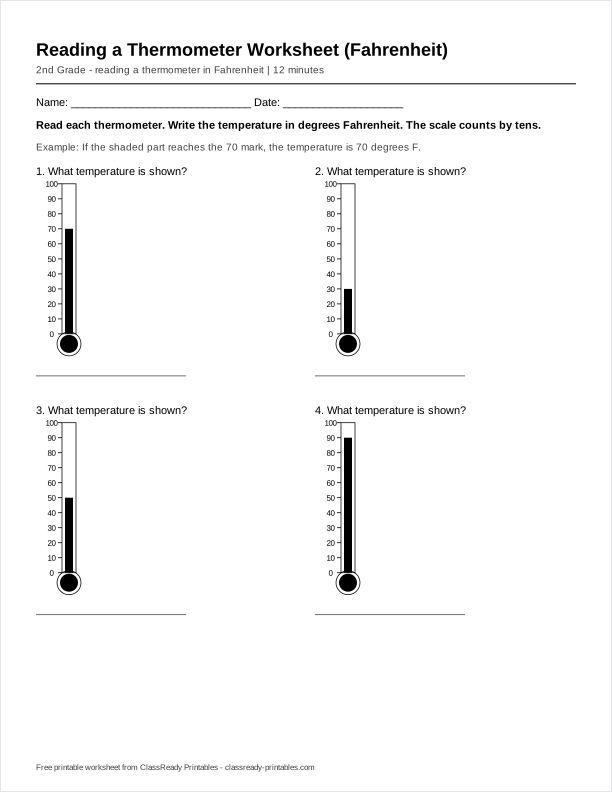
Reading a Thermometer Worksheet (Fahrenheit)
Read each thermometer and write the temperature in degrees Fahrenheit.
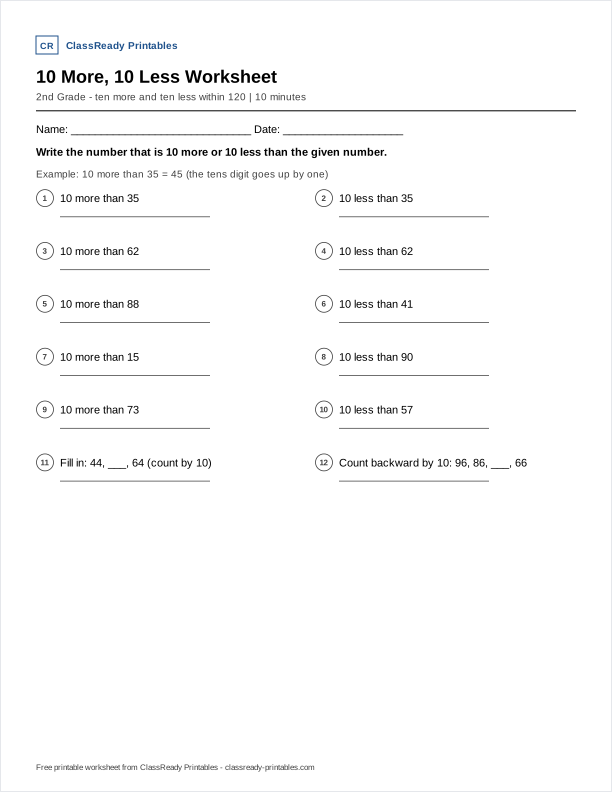
10 More, 10 Less Worksheet
Ten more means adding 10; ten less means taking 10 away. The ones digit stays the same — only the tens change.
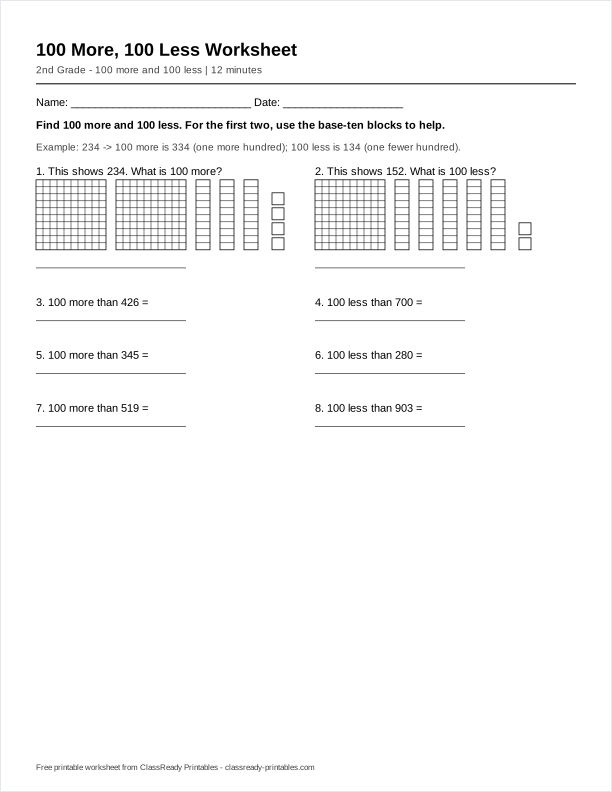
100 More, 100 Less Worksheet
Find 100 more and 100 less than a number by adding or removing one hundred-flat.
2-Digit Addition with Regrouping Worksheet
Practice adding two-digit numbers that require carrying a ten — the heart of second-grade addition.
Frequently Asked Questions
Is this worksheet free to download?
Yes. You can download and print this worksheet for free, with no sign-up required.
Does it come with an answer key?
Yes — a complete answer key is included.
Original & reviewed. Every worksheet is created in-house from a grade-level skill brief, checked for a correct answer key, and reviewed for grade-appropriateness. Our editorial policy.