4th Grade Commonly Confused Words Worksheet
Some words look or sound alike but mean different things. Circle the correct word for each sentence.
- Homework
- Review
- Test Prep
- Centers
Download the Free Printable PDF
No sign-up required. Clean, low-ink US Letter format.
- Grade
- 4th Grade
- Subject
- Reading
- Skill
- Vocabulary
- Topic
- commonly confused words
- Difficulty
- Standard
- Time
- 15 minutes
- Pages
- 2 (incl. answer key)
- Format
- Printable PDF (US Letter)
- Answer key
- Included
- Best for
- homework, review, test prep, centers
Worksheet details
What This Worksheet Practices
Students will choose the correct word from pairs that are often confused and explain the difference in meaning.
- Choosing between commonly confused words
- Using meaning to pick the right word
- Avoiding common writing errors
Inside This Printable
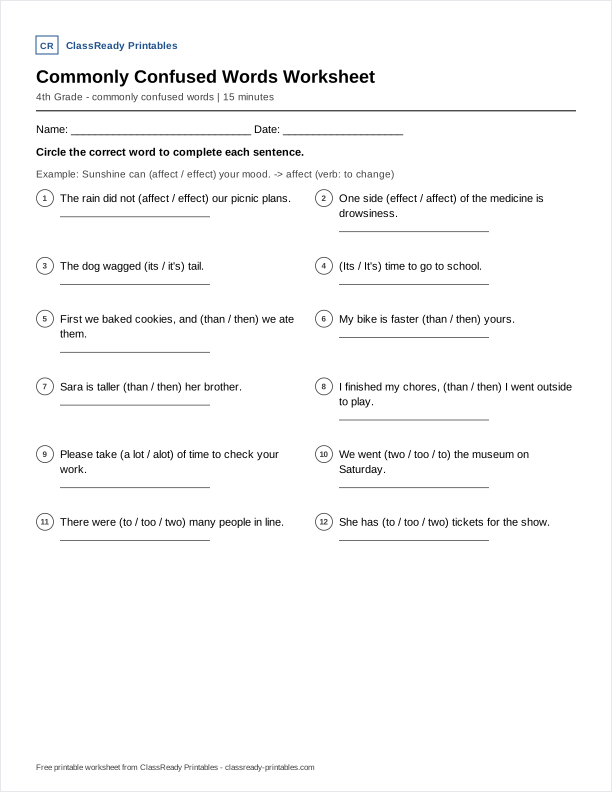
Student directions: Circle the correct word to complete each sentence.
Worked example
Sunshine can (affect / effect) your mood. -> affect (verb: to change)
Sample questions
- The rain did not (affect / effect) our picnic plans.
- One side (effect / affect) of the medicine is drowsiness.
- The dog wagged (its / it's) tail.
The PDF contains 12 practice questions plus 2 challenge questions.
Worksheet Preview
Easy to mix up
Some words get confused because they sound alike or are close in spelling — like affect/effect, its/it’s, and than/then. The trick is to think about the meaning you need, not just the sound.
The pairs to master
| Pair | Meaning | Test |
|---|---|---|
| affect / effect | action (verb) / result (noun) | “The ___ of the storm” → effect |
| its / it’s | belongs to it / it is | Expand it’s to “it is” |
| than / then | comparing / next in time | ”Better ___ before” → than |
| lose / loose | not win / not tight | Opposite of tight → loose |
| accept / except | receive / excluding | ”Everyone ___ Sam” → except |
Worked example
“The new rule didn’t ___ the third graders.” (affect / effect) We need an action word (the rule does something) → affect.
How to solve each item
Test each choice in the sentence. For affect/effect, remember: affect is usually the action (verb), effect is usually the result (noun). For its/it’s, expand it’s to “it is” and see if it fits.
Guided practice (try before the worksheet)
- “The medicine had a strong ___.” (affect / effect)
- “The dog wagged ___ tail.” (its / it’s)
- “This shirt feels ___ after washing.” (lose / loose)
- “Everyone went ___ me.” (accept / except)
Why it matters
Confused-word errors are among the most common writing mistakes. Fixing them instantly makes writing look polished and professional — at school and beyond.
Next steps
Pairs with homophones and context clues.
👩🏫 Teacher note
Point out the pattern: affect is usually a verb (to change), effect is usually a noun (a result).
🏠 Parent note
Ask your child to say the sentence two ways — once with each choice — and listen for which makes sense.
Common Mistakes to Watch For
- Using affect and effect interchangeably
- Choosing the wrong spelling of its vs. it's or your vs. you're
Answer Key
One correct choice per item; explanations are included on the answer key.
⬇ Download Answer Key (PDF)Learn this skill first
Take the free lesson on vocabulary — worked examples and practice exercises, then come back to this worksheet.
Related Worksheets
Homophones Worksheet
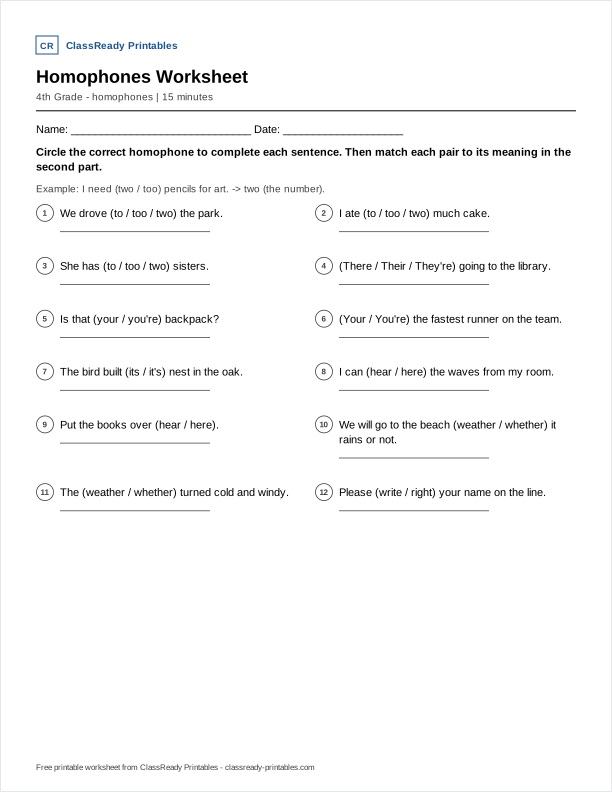
Homophones sound the same but mean different things (to, too, two). Circle the word that fits each sentence.
Synonyms and Antonyms Worksheet
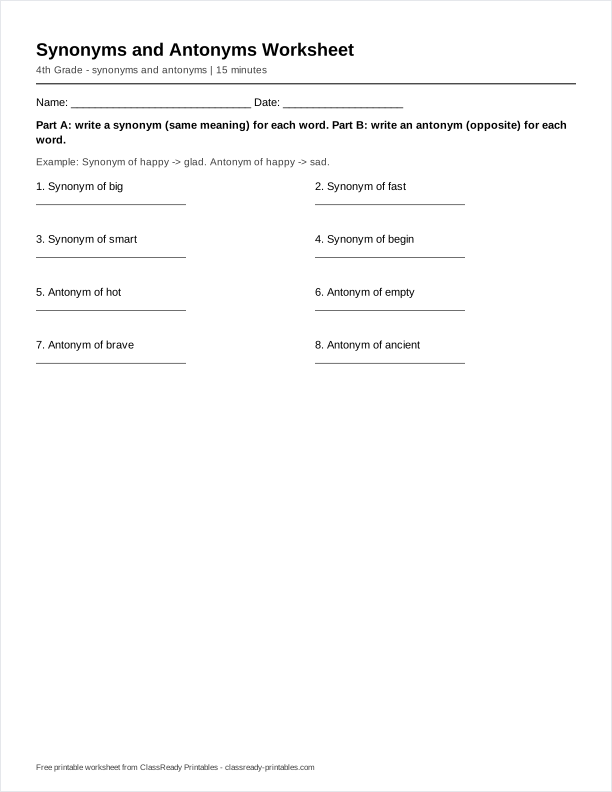
Synonyms mean the same; antonyms mean the opposite. Give a synonym or antonym for each word.
Context Clues Worksheet
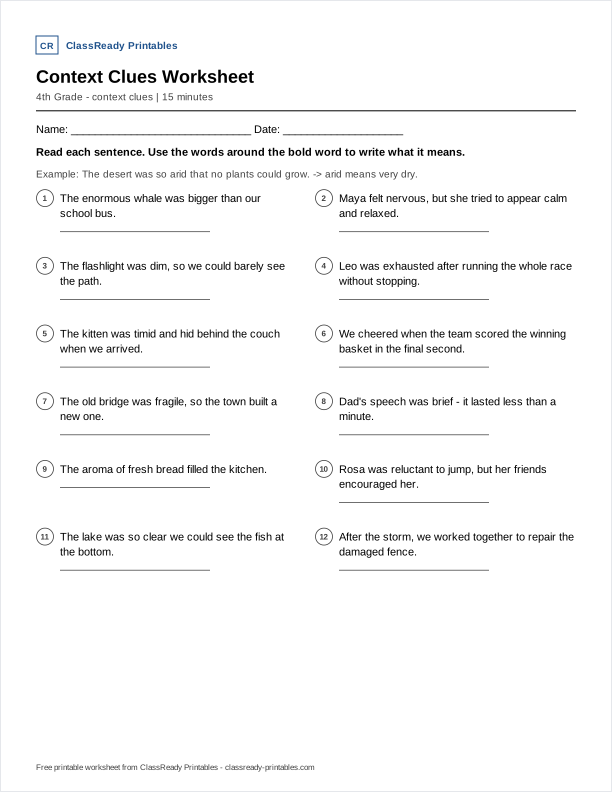
When you meet a word you don't know, the words around it can tell you what it means. Write the meaning of each bold word.
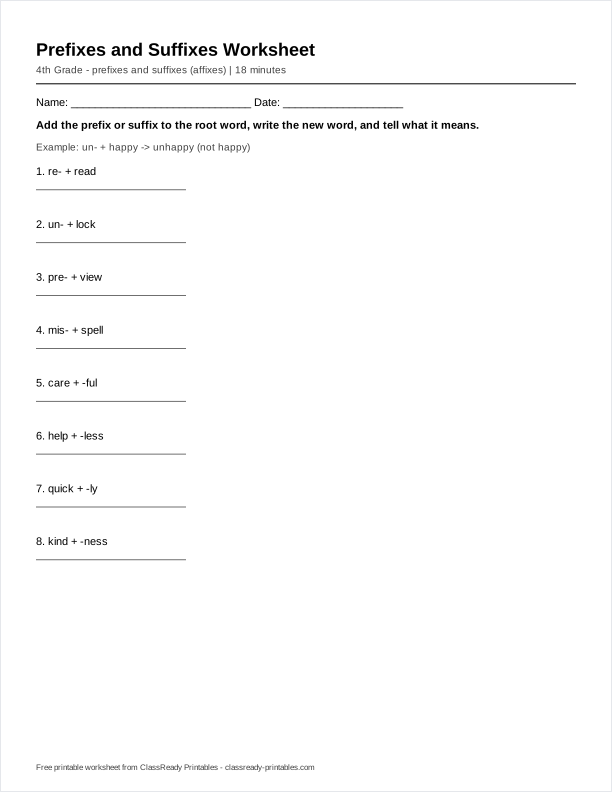
Prefixes and Suffixes Worksheet
A prefix goes before a root word and a suffix goes after — both change the meaning. Build and define words using common affixes.
Frequently Asked Questions
Is this worksheet free to download?
Yes. You can download and print this worksheet for free, with no sign-up required.
Does it come with an answer key?
Yes — a complete answer key is included.
Original & reviewed. Every worksheet is created in-house from a grade-level skill brief, checked for a correct answer key, and reviewed for grade-appropriateness. Our editorial policy.