4th Grade Context Clues Worksheet
When you meet a word you don't know, the words around it can tell you what it means. Write the meaning of each bold word.
- Homework
- Review
- Test Prep
- Centers
Download the Free Printable PDF
No sign-up required. Clean, low-ink US Letter format.
- Grade
- 4th Grade
- Subject
- Reading
- Skill
- Vocabulary
- Topic
- context clues
- Difficulty
- Standard
- Time
- 15 minutes
- Pages
- 2 (incl. answer key)
- Format
- Printable PDF (US Letter)
- Answer key
- Included
- Best for
- homework, review, test prep, centers
Worksheet details
What This Worksheet Practices
Students will use clues in a sentence or passage to determine the meaning of an unfamiliar word.
- Looking for clues in the same sentence
- Looking for clues in nearby sentences
- Writing a meaning in their own words
Inside This Printable
Student directions: Read each sentence. Use the words around the bold word to write what it means.
Worked example
The desert was so arid that no plants could grow. -> arid means very dry.
Sample questions
- The enormous whale was bigger than our school bus.
- Maya felt nervous, but she tried to appear calm and relaxed.
- The flashlight was dim, so we could barely see the path.
The PDF contains 12 practice questions plus 2 challenge questions.
Worksheet Preview
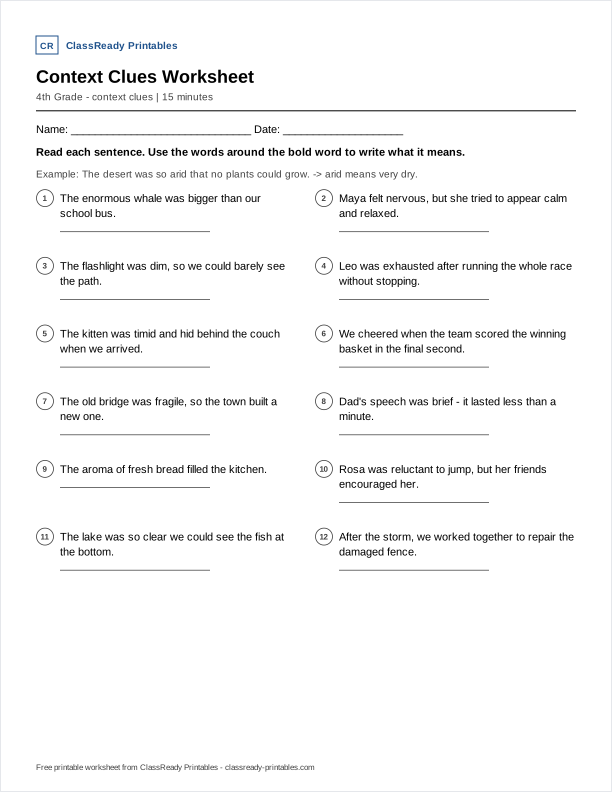
Use the words around it
When you meet a word you don’t know, reread the whole sentence — the meaning is almost always hidden in the words nearby. Look for a definition, a synonym, an example, or a contrast signal like but or however.
Four kinds of clues
| Clue | What it looks like | Example |
|---|---|---|
| Definition | The word is explained right after | ”She felt elated, full of joy.” |
| Synonym | A same-meaning word nearby | ”The gigantic — truly enormous — truck” |
| Example | Words listed as examples | ”Crustaceans: crabs, lobsters, shrimp” |
| Contrast | An opposite word signals but/although | ”He was timid, but his sister was bold.” |
Worked example
“The storm caused havoc in the town; fences blew down and roofs tore off.” Read past the bold word — the examples (fences blew down, roofs tore off) tell you havoc means chaos / destruction.
How to solve each item
For each bold word, ask: “What do the other words in this sentence tell me?” Cover the word, read the sentence, predict the meaning, then check. If no clue is in the sentence, look one sentence ahead.
Guided practice (try before the worksheet)
- “The arduous climb took all day — steep, rocky, and exhausting.” → arduous means …
- “Her answer was ambiguous, but the teacher asked for a clear one.” → ambiguous means …
- “He was parched after the run; he drank two bottles of water.” → parched means …
Why it matters
Readers meet thousands of unfamiliar words. Context clues let you keep reading without stopping, which builds comprehension and vocabulary at the same time.
Next steps
Pairs with homophones and synonyms and antonyms.
👩🏫 Teacher note
Teach students to look for a definition, a synonym, an example, or a contrast signal (but, however) in the sentence.
🏠 Parent note
Cover the bold word, read the sentence together, guess the meaning, then uncover and check.
Common Mistakes to Watch For
- Stopping at the word instead of rereading the whole sentence
- Choosing a meaning the word could have in another sentence
Answer Key
Accept any meaning that fits the sentence and shows understanding.
⬇ Download Answer Key (PDF)Learn this skill first
Take the free lesson on vocabulary — worked examples and practice exercises, then come back to this worksheet.
Related Worksheets
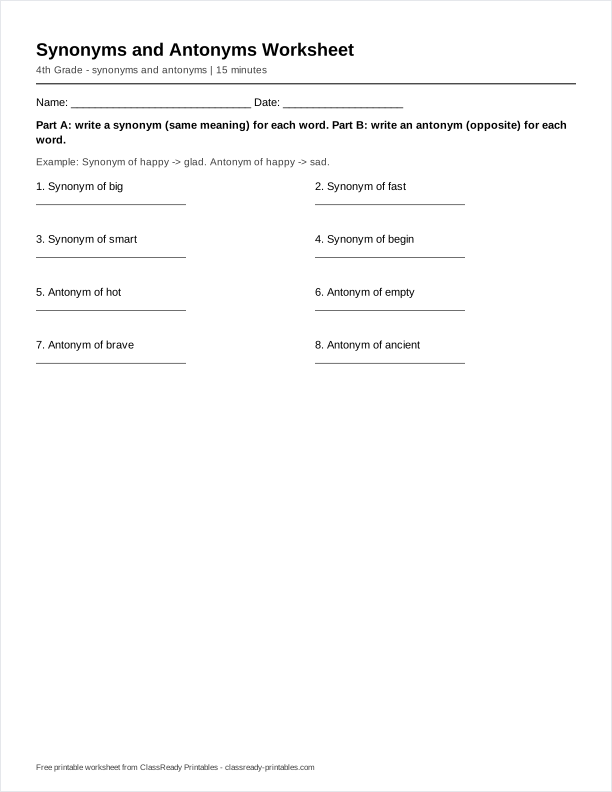
Synonyms and Antonyms Worksheet
Synonyms mean the same; antonyms mean the opposite. Give a synonym or antonym for each word.
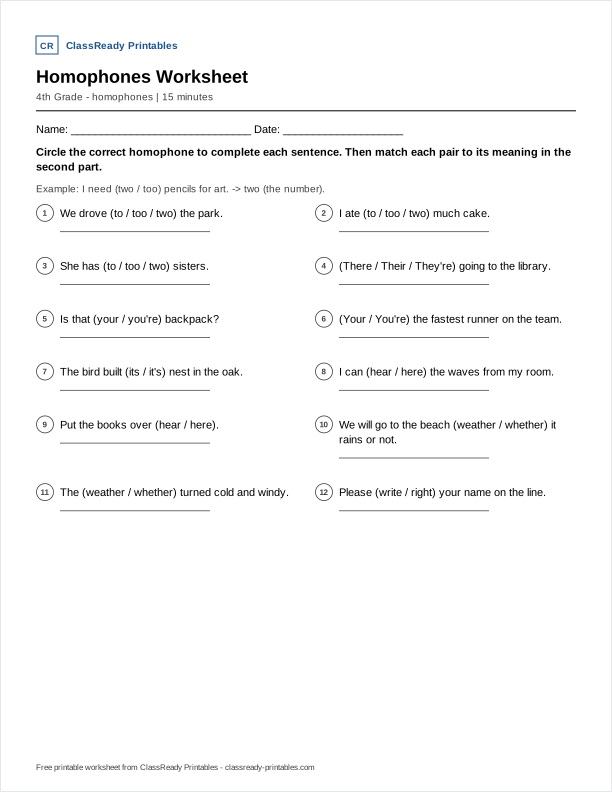
Homophones Worksheet
Homophones sound the same but mean different things (to, too, two). Circle the word that fits each sentence.
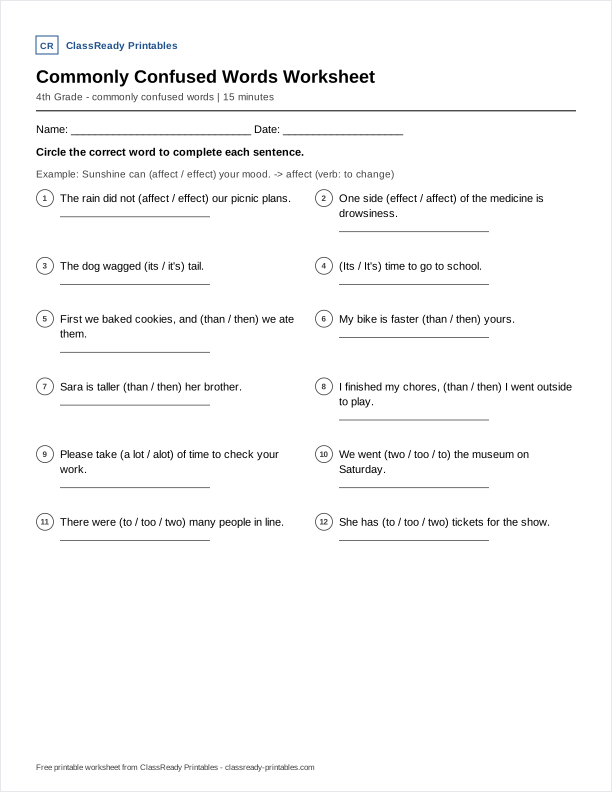
Commonly Confused Words Worksheet
Some words look or sound alike but mean different things. Circle the correct word for each sentence.
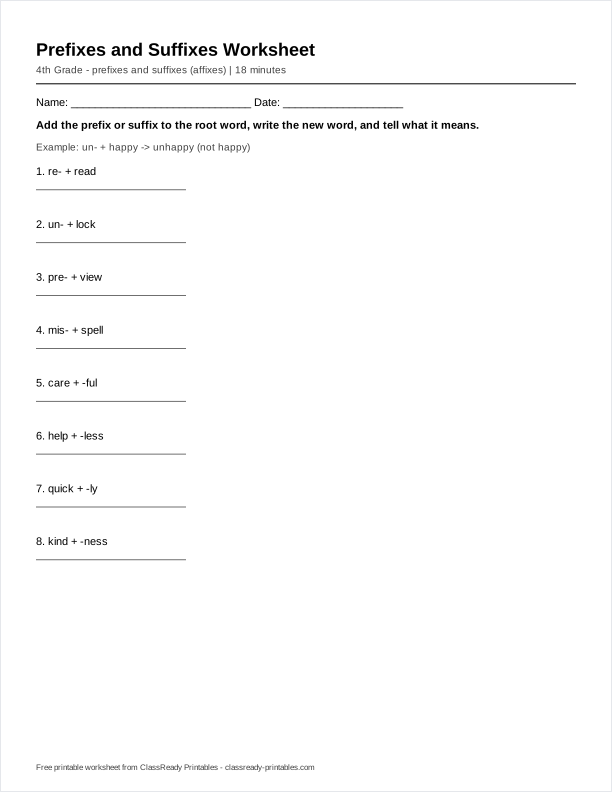
Prefixes and Suffixes Worksheet
A prefix goes before a root word and a suffix goes after — both change the meaning. Build and define words using common affixes.
Frequently Asked Questions
Is this worksheet free to download?
Yes. You can download and print this worksheet for free, with no sign-up required.
Does it come with an answer key?
Yes — a complete answer key is included.
Original & reviewed. Every worksheet is created in-house from a grade-level skill brief, checked for a correct answer key, and reviewed for grade-appropriateness. Our editorial policy.