4th Grade Homophones Worksheet
Homophones sound the same but mean different things (to, too, two). Circle the word that fits each sentence.
- Homework
- Review
- Test Prep
- Centers
Download the Free Printable PDF
No sign-up required. Clean, low-ink US Letter format.
- Grade
- 4th Grade
- Subject
- Reading
- Skill
- Vocabulary
- Topic
- homophones
- Difficulty
- Standard
- Time
- 15 minutes
- Pages
- 2 (incl. answer key)
- Format
- Printable PDF (US Letter)
- Answer key
- Included
- Best for
- homework, review, test prep, centers
Worksheet details
What This Worksheet Practices
Students will choose the correct homophone for a sentence and explain the meaning of common homophone pairs.
- Choosing between common homophones
- Using context to decide meaning
- Distinguishing contractions from possessives
Inside This Printable
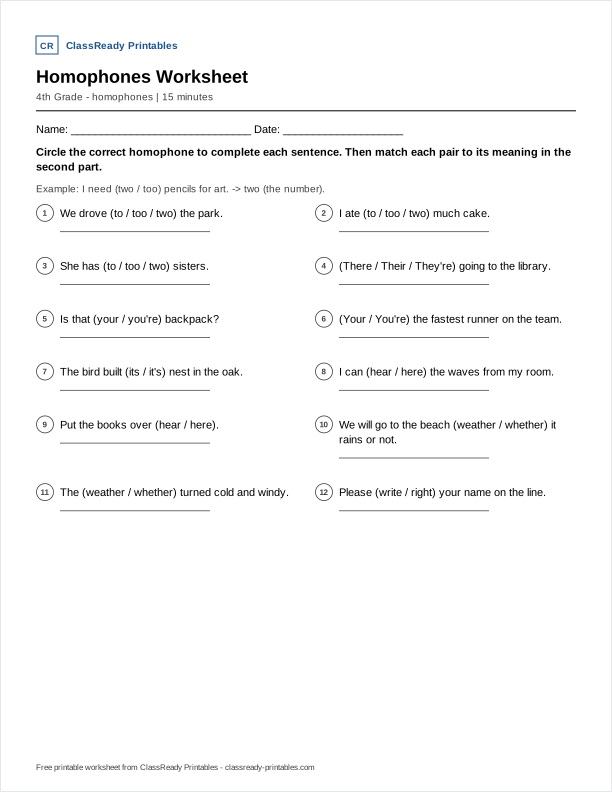
Student directions: Circle the correct homophone to complete each sentence. Then match each pair to its meaning in the second part.
Worked example
I need (two / too) pencils for art. -> two (the number).
Sample questions
- We drove (to / too / two) the park.
- I ate (to / too / two) much cake.
- She has (to / too / two) sisters.
The PDF contains 12 practice questions plus 2 challenge questions.
Worksheet Preview
Sound the same, mean different
Homophones are words that sound alike but have different spellings and meanings — like to, too, and two, or there, their, and they’re. Writers must choose the spelling that matches the meaning of the sentence.
The most-confused pairs
| Pair | Meaning | Try this test |
|---|---|---|
| to / too / two | toward / also / the number 2 | ”I want ___ go ___!” → to, too |
| there / their / they’re | a place / belongs to them / they are | Replace with “they are” to test |
| your / you’re | belongs to you / you are | Replace with “you are” |
| its / it’s | belongs to it / it is | Replace with “it is” |
| than / then | comparing / next in time | ”Bigger ___ me” → than |
Worked example
“The dogs wagged ___ tails when they saw us.” (their / there / they’re) We mean belongs to the dogs → their. The other two don’t fit the meaning.
How to solve each item
Read the sentence aloud, decide what the word means in that spot, then pick the spelling that matches. For tricky pairs like your vs. you’re, ask: “Does this mean ‘belongs to you’ (your) or ‘you are’ (you’re)?”
Guided practice (try before the worksheet)
- ”___ going to the park.” (Their / They’re)
- “Is this pencil ___?” (your / you’re)
- “The puppy licked ___ paw.” (its / it’s)
- “I’d rather run ___ walk.” (then / than)
Why it matters
Spelling mistakes that change meaning make writing confusing to readers. Mastering homophones makes your writing instantly more accurate and readable.
Next steps
Pairs with synonyms and antonyms and commonly confused words.
👩🏫 Teacher note
Say each pair aloud and connect the spelling to the meaning. Teach your vs. you're by asking 'does it mean it belongs to you?'
🏠 Parent note
Have your child read the sentence out loud, decide the meaning, then pick the spelling that matches it.
Common Mistakes to Watch For
- Choosing a word that sounds right but is spelled for a different meaning
- Confusing possessive forms with contractions (your vs. you're)
Answer Key
Only one correct choice per item; answers follow the sentences in order.
⬇ Download Answer Key (PDF)Learn this skill first
Take the free lesson on vocabulary — worked examples and practice exercises, then come back to this worksheet.
Related Worksheets
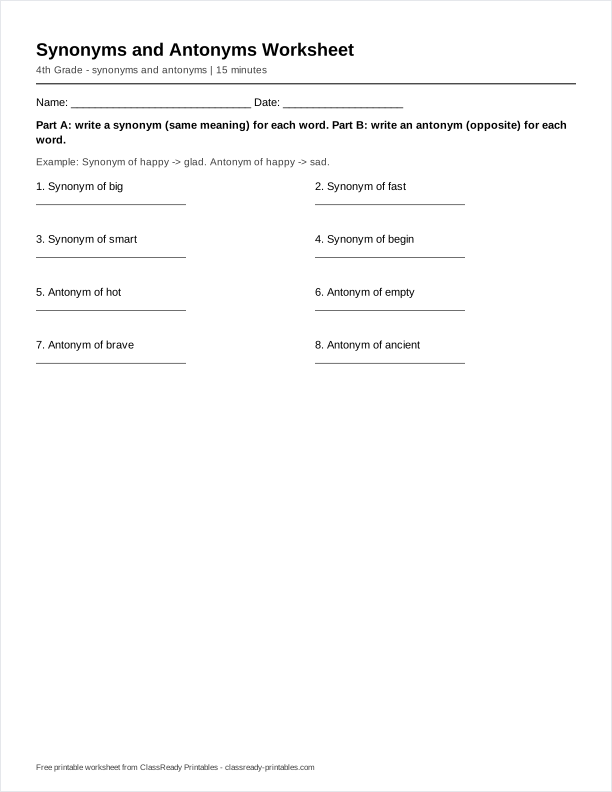
Synonyms and Antonyms Worksheet
Synonyms mean the same; antonyms mean the opposite. Give a synonym or antonym for each word.
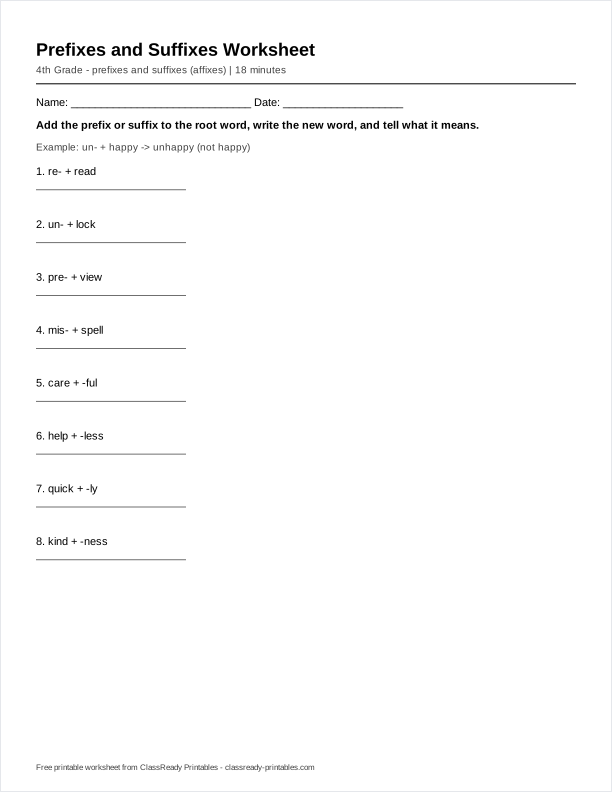
Prefixes and Suffixes Worksheet
A prefix goes before a root word and a suffix goes after — both change the meaning. Build and define words using common affixes.
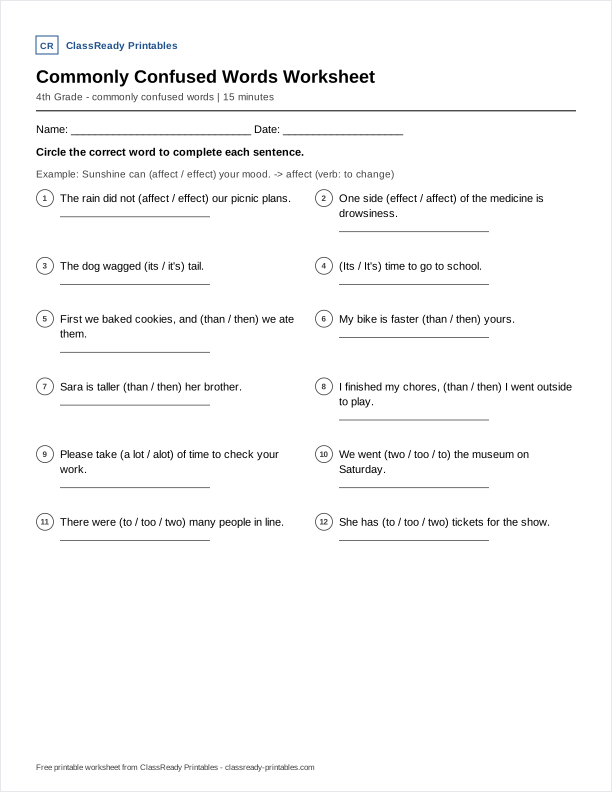
Commonly Confused Words Worksheet
Some words look or sound alike but mean different things. Circle the correct word for each sentence.
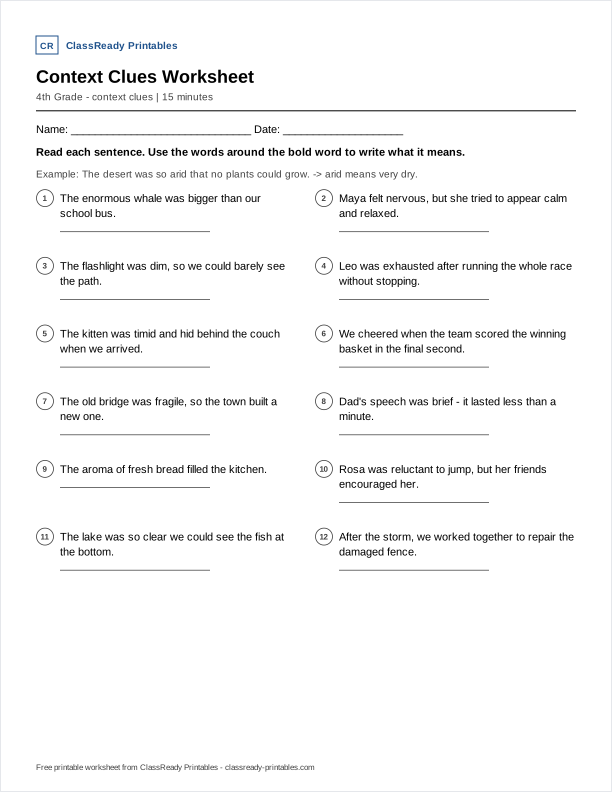
Context Clues Worksheet
When you meet a word you don't know, the words around it can tell you what it means. Write the meaning of each bold word.
Frequently Asked Questions
Is this worksheet free to download?
Yes. You can download and print this worksheet for free, with no sign-up required.
Does it come with an answer key?
Yes — a complete answer key is included.
Original & reviewed. Every worksheet is created in-house from a grade-level skill brief, checked for a correct answer key, and reviewed for grade-appropriateness. Our editorial policy.