5th Grade Dividing Fractions Worksheet (Unit Fractions)
Divide unit fractions by whole numbers, and whole numbers by unit fractions, using what division means.
- Homework
- Review
- Test Prep
- Tutoring
Download the Free Printable PDF
No sign-up required. Clean, low-ink US Letter format.
- Grade
- 5th Grade
- Subject
- Math
- Skill
- Fractions
- Topic
- dividing unit fractions and whole numbers
- Difficulty
- Standard
- Time
- 16 minutes
- Pages
- 2 (incl. answer key)
- Format
- Printable PDF (US Letter)
- Answer key
- Included
- Best for
- homework, review, test prep, tutoring
Worksheet details
What This Worksheet Practices
Students will divide a unit fraction by a whole number and a whole number by a unit fraction.
- Dividing a unit fraction by a whole number
- Dividing a whole number by a unit fraction
- Reasoning about why the answer is bigger or smaller
Inside This Printable
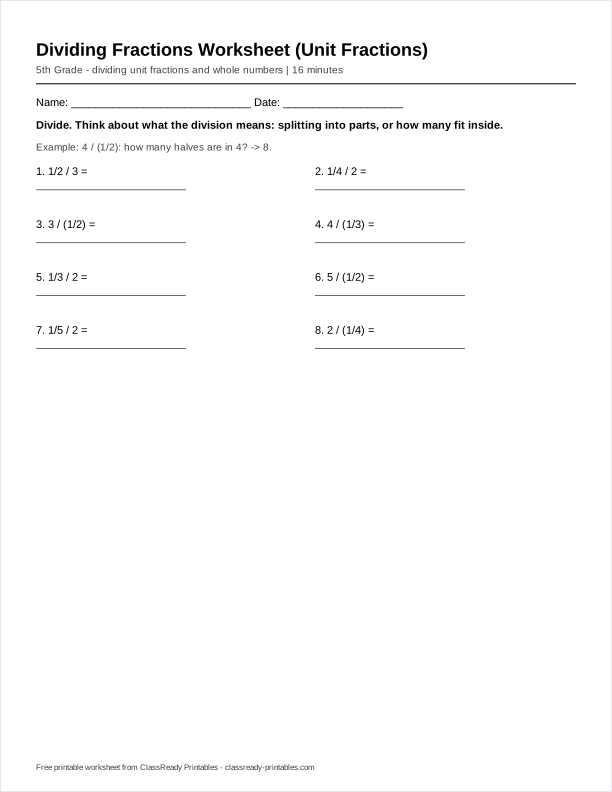
Student directions: Divide. Think about what the division means: splitting into parts, or how many fit inside.
Worked example
4 / (1/2): how many halves are in 4? -> 8.
Sample questions
- 1/2 / 3 =
- 1/4 / 2 =
- 3 / (1/2) =
The PDF contains 8 practice questions plus 2 challenge questions.
Worksheet Preview
Two ways to divide with fractions
Fifth graders divide in two cases. A unit fraction by a whole number splits a small piece into even smaller pieces: 1/2 ÷ 3 = 1/6. A whole number by a unit fraction asks how many of those pieces fit inside: 4 ÷ 1/2 = 8 (there are eight halves in four). Reasoning about the meaning keeps the two cases straight.
How to use it
Ask “am I splitting, or counting how many fit?” Splitting makes the answer smaller; counting how many fit makes it bigger. Builds on multiplying fractions.
👩🏫 Teacher note
Two cases: 1/2 / 3 splits a half into 3 parts (smaller: 1/6); 4 / (1/2) asks how many halves are in 4 (bigger: 8). Reasoning about the meaning prevents blind rule-following.
🏠 Parent note
Splitting a fraction into more parts makes smaller pieces. Asking 'how many halves are in 4?' gives a bigger number.
Common Mistakes to Watch For
- Dividing instead of using the inverse relationship
- Confusing the two cases (which gets bigger, which gets smaller)
Answer Key
Each answer shows the quotient.
⬇ Download Answer Key (PDF)Learn this skill first
Take the free lesson on fractions — worked examples and practice exercises, then come back to this worksheet.
Related Worksheets
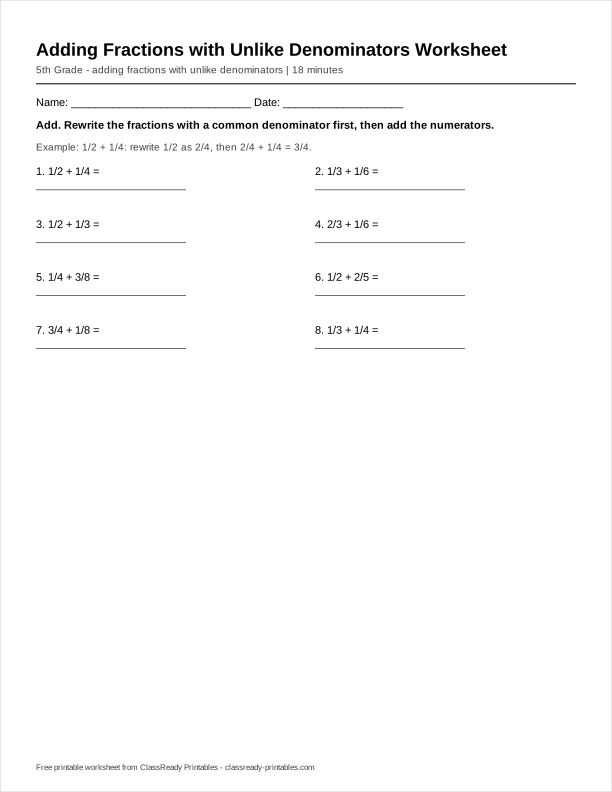
Adding Fractions with Unlike Denominators Worksheet
Add fractions with different denominators by rewriting them over a common denominator first.
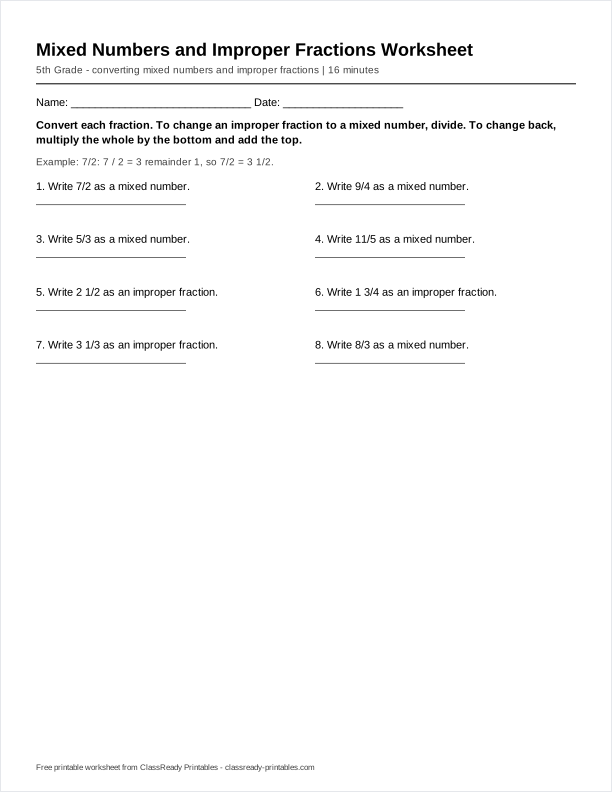
Mixed Numbers and Improper Fractions Worksheet
Convert improper fractions to mixed numbers and back, keeping the denominator the same.
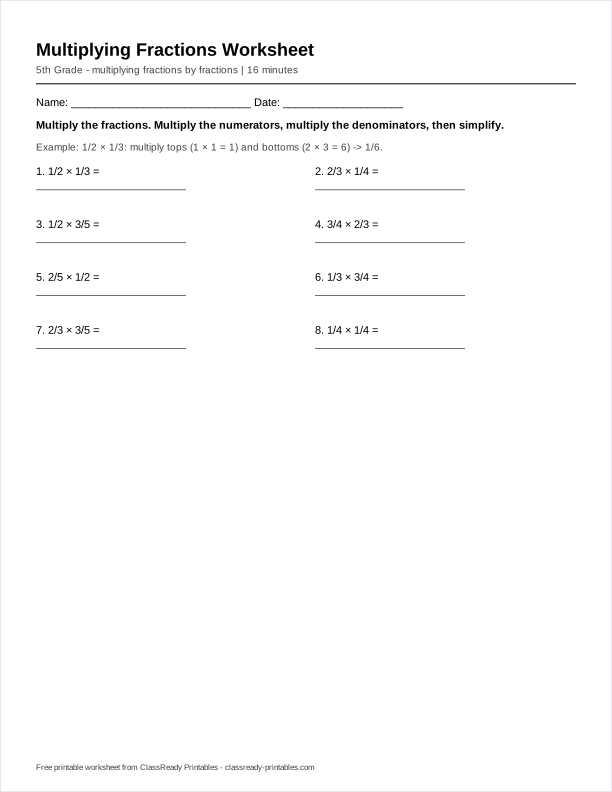
Multiplying Fractions Worksheet
Multiply fractions by multiplying the numerators and the denominators, then simplifying when you can.
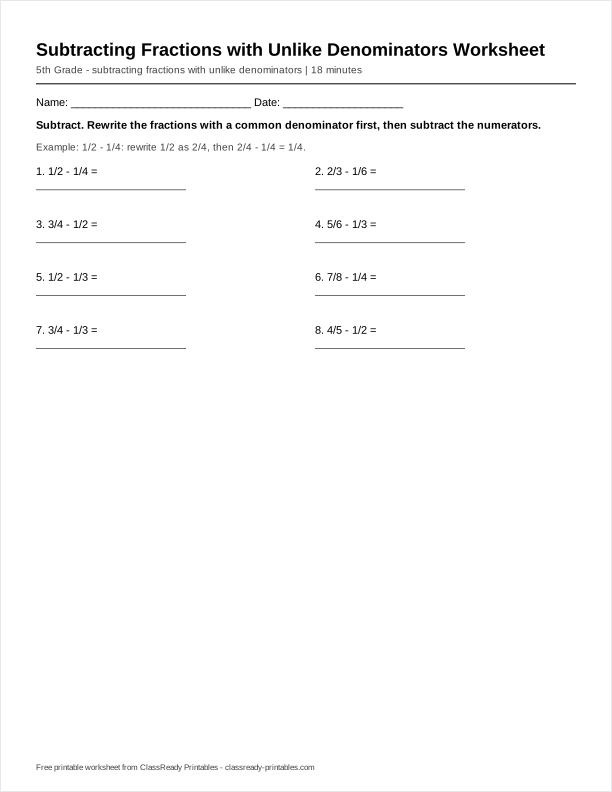
Subtracting Fractions with Unlike Denominators Worksheet
Subtract fractions with different denominators by rewriting them over a common denominator first.
Frequently Asked Questions
Is this worksheet free to download?
Yes. You can download and print this worksheet for free, with no sign-up required.
Does it come with an answer key?
Yes — a complete answer key is included.
Original & reviewed. Every worksheet is created in-house from a grade-level skill brief, checked for a correct answer key, and reviewed for grade-appropriateness. Our editorial policy.