Money — 2nd Grade Lesson
Students will identify coin values, count coin collections, and make change up to one dollar.
2nd Grade · Money · ~25 min lesson
Coin values
| Coin | Value | Count by |
|---|---|---|
| Penny | 1¢ | ones |
| Nickel | 5¢ | fives |
| Dime | 10¢ | tens |
| Quarter | 25¢ | 25s |
Counting a collection of coins
Count the largest coins first and keep a running total.
Quarter + dime + nickel + penny = 25 → 35 → 40 → 41¢
Skip counting with coins
- Nickels: 5, 10, 15, 20, 25
- Dimes: 10, 20, 30, 40
- Quarters: 25, 50, 75, 100 ($1.00)
Making change
Making change is subtracting: money paid − cost = change.
Cost 75¢, pay $1.00 → 100 − 75 = 25¢ (one quarter).
A good check: count up from the cost to the amount paid. From 75¢: 25 more cents reaches $1.00.
Writing money
Use the cent sign for amounts under a dollar (75¢) and the dollar sign for a dollar or more ($1.25). 25¢ = $0.25.
How to practice at home
- Real coin sorting: sort a handful of change into pennies, nickels, dimes, quarters.
- Count a coin jar and keep a running total.
- Store math: “This costs $1. If you pay with 5 quarters, what’s your change?”
- Coin race: who can count a small pile of change fastest and correctly?
Practice with the exercises above, then download these free printable worksheets:
Practice Exercises
Try these on your own, then reveal the answer to check.
What is the value of a penny?
💡 The brown coin is worth 1 cent.
What is the value of a nickel?
💡 The silver coin with smooth edges is worth 5 cents.
How much is a dime plus a nickel?
💡 10 + 5 = 15.
How many quarters make one dollar?
💡 25 × 4 = 100.
You have a quarter, a dime, and a penny. How much in total?
💡 25 + 10 + 1 = 36.
An item costs 75 cents. You pay with a dollar. How much change?
💡 100 - 75 = 25.
Printable Worksheets
Put this lesson into practice with free, printable worksheets — each with an answer key.
Before You Start
- Skip counting by 5s, 10s, and 25s
- Adding and subtracting to 100
Common Mistakes to Watch For
- Confusing the value of a nickel (5¢) and a dime (10¢) by size
- Forgetting to count quarters first (largest value first)
What to Learn Next
Browse more Money worksheets or explore all 2nd Grade worksheets.
Related Worksheets
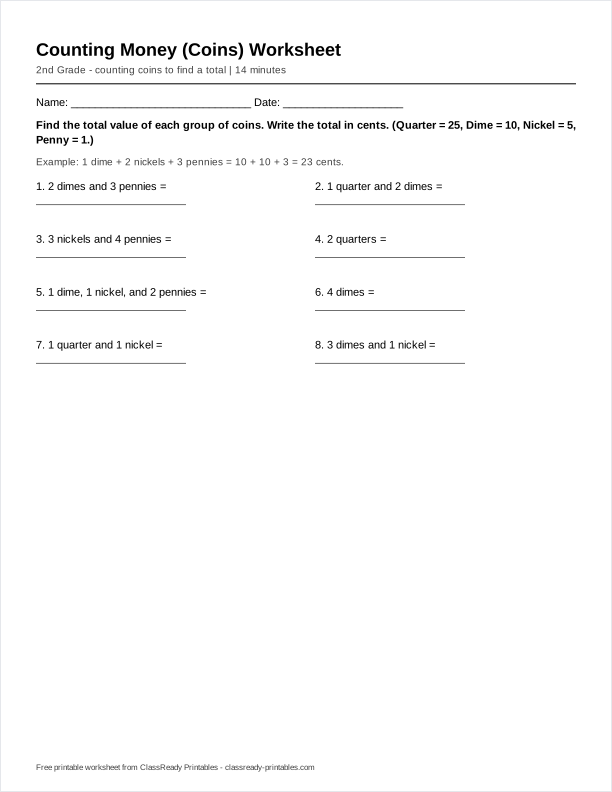
Counting Money (Coins) Worksheet
Find the total value of each group of coins in cents, starting with the largest coins.
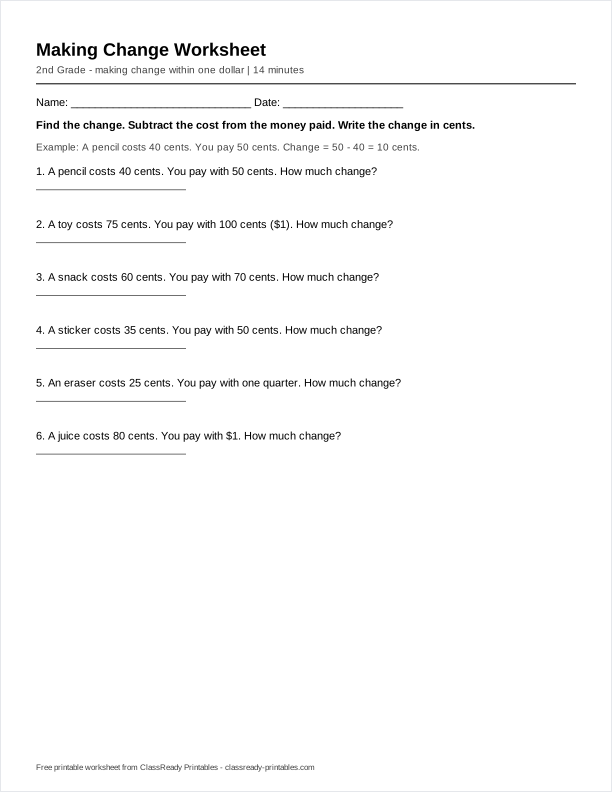
Making Change Worksheet
Find the change after each purchase by subtracting the cost from the money paid.
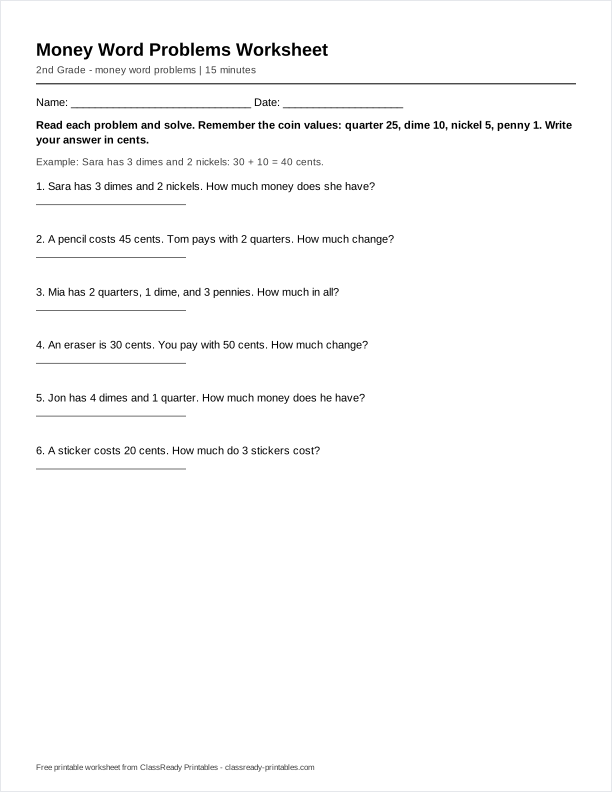
Money Word Problems Worksheet
Solve money word problems — find the total value of coins and figure out the change.
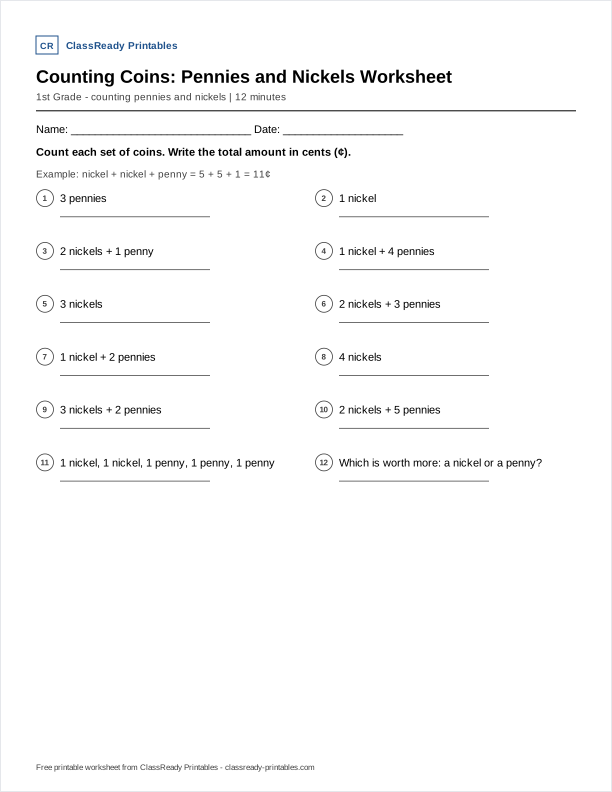
Counting Coins: Pennies and Nickels Worksheet
Pennies are worth 1 cent and nickels are worth 5 cents. Count each set of coins and write the total.
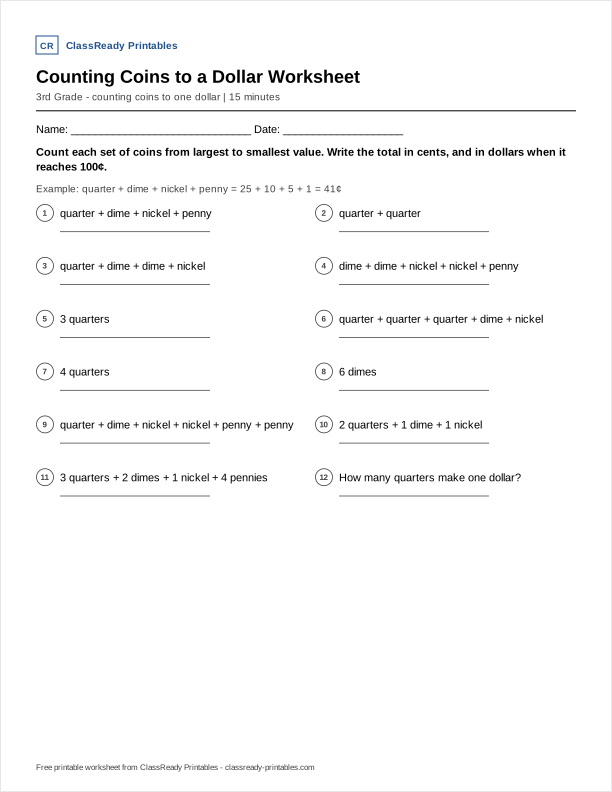
Counting Coins to a Dollar Worksheet
Count each set of coins from largest to smallest value — quarters, dimes, nickels, then pennies — and write the total.
Frequently Asked Questions
What money skills does a 2nd grader need?
Identify pennies, nickels, dimes, and quarters, count a collection of coins up to one dollar, and make change using addition and subtraction.
How do I teach counting coins?
Always count the largest coins first: quarters, then dimes, nickels, pennies. Start a running total and skip count as you go — for example, 25, 35, 40, 41.
Original & reviewed. Every worksheet is created in-house from a grade-level skill brief, checked for a correct answer key, and reviewed for grade-appropriateness. Our editorial policy.