4th Grade Types of Angles Worksheet (Acute, Right, Obtuse)
Look at each angle and tell whether it is acute (less than a right angle), right, or obtuse (more than a right angle).
- Homework
- Centers
- Review
- Test Prep
Download the Free Printable PDF
No sign-up required. Clean, low-ink US Letter format.
- Grade
- 4th Grade
- Subject
- Math
- Skill
- Geometry
- Topic
- classifying angles as acute, right, or obtuse
- Difficulty
- Standard
- Time
- 12 minutes
- Pages
- 2 (incl. answer key)
- Format
- Printable PDF (US Letter)
- Answer key
- Included
- Best for
- homework, centers, review, test prep
Worksheet details
What This Worksheet Practices
Students will classify angles as acute, right, or obtuse by comparing them to a right angle.
- Recognizing a right angle (90 degrees)
- Classifying acute and obtuse angles
- Comparing an angle to a right angle
Inside This Printable
Student directions: Write whether each angle is acute, right, or obtuse. Compare each one to a right angle (a square corner).
Worked example
An angle that opens exactly like a square corner is a right angle (90 degrees).
Sample questions
- Acute, right, or obtuse?
- Acute, right, or obtuse?
- Acute, right, or obtuse?
The PDF contains 6 practice questions plus 2 challenge questions.
Worksheet Preview
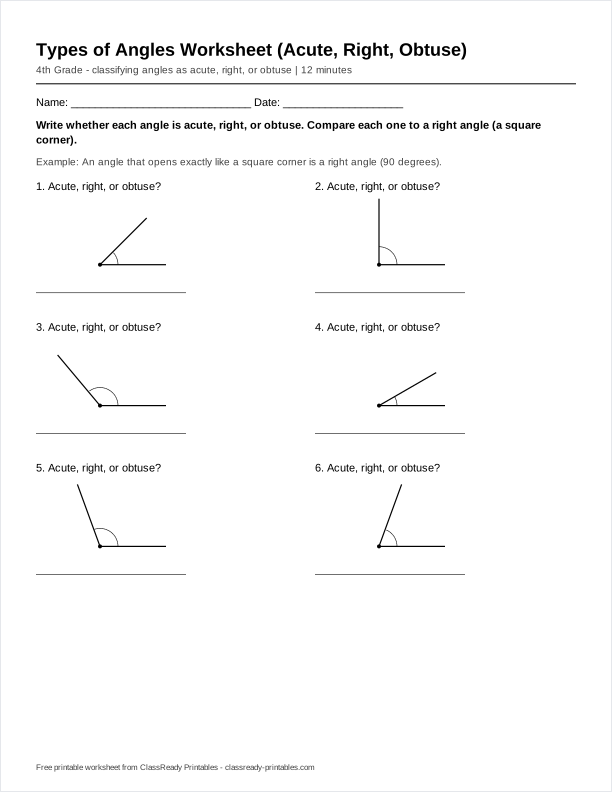
Compare every angle to a right angle
The easiest way to classify an angle is to compare it to a right angle — the square corner that measures 90 degrees. A smaller opening is acute; a wider opening is obtuse; an exact square corner is right. A common trap: the length of the rays doesn’t matter, only how wide the angle opens.
How to use it
Have students picture a square corner and ask, “Is this opening smaller, the same, or wider?” That single comparison sorts every angle. Builds on recognizing 2D shapes and their corners.
👩🏫 Teacher note
Compare every angle to a right angle (a square corner). Smaller opening = acute; square corner = right; wider opening = obtuse. The length of the rays does not matter.
🏠 Parent note
A right angle looks like the corner of a square. Smaller than that is acute; wider is obtuse.
Common Mistakes to Watch For
- Confusing acute and obtuse
- Judging by ray length instead of the opening
Answer Key
Each answer says acute, right, or obtuse.
⬇ Download Answer Key (PDF)Learn this skill first
Take the free lesson on geometry — worked examples and practice exercises, then come back to this worksheet.
Related Worksheets
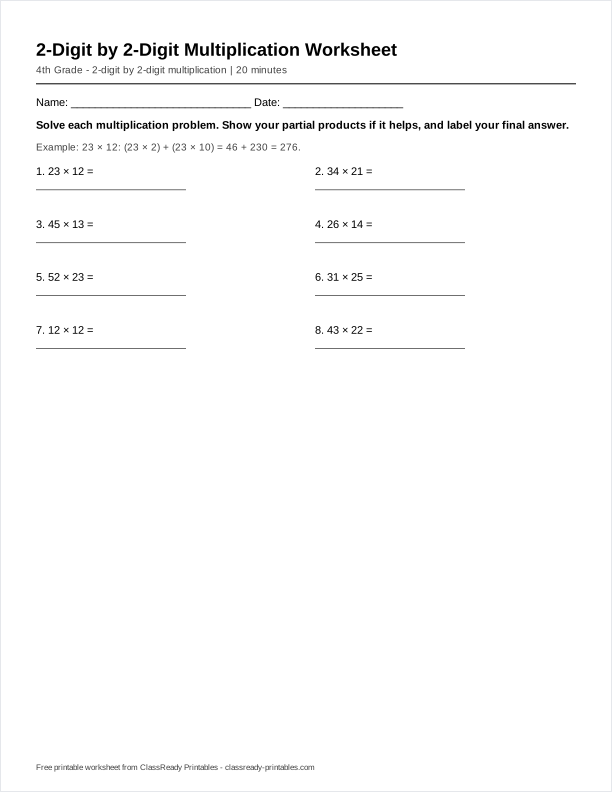
2-Digit by 2-Digit Multiplication Worksheet
Build fluency with multi-digit multiplication by multiplying two-digit numbers, then adding the partial products.
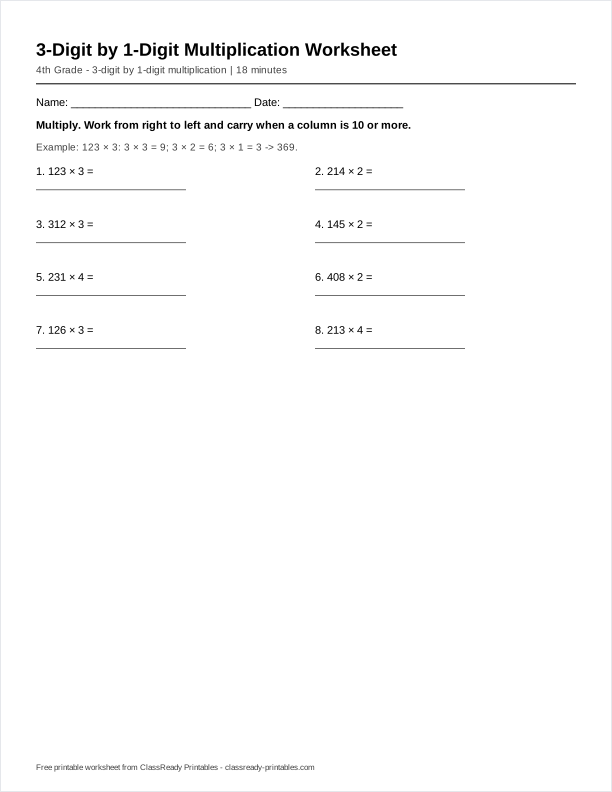
3-Digit by 1-Digit Multiplication Worksheet
Multiply three-digit numbers by a single digit, carrying when a column is 10 or more.
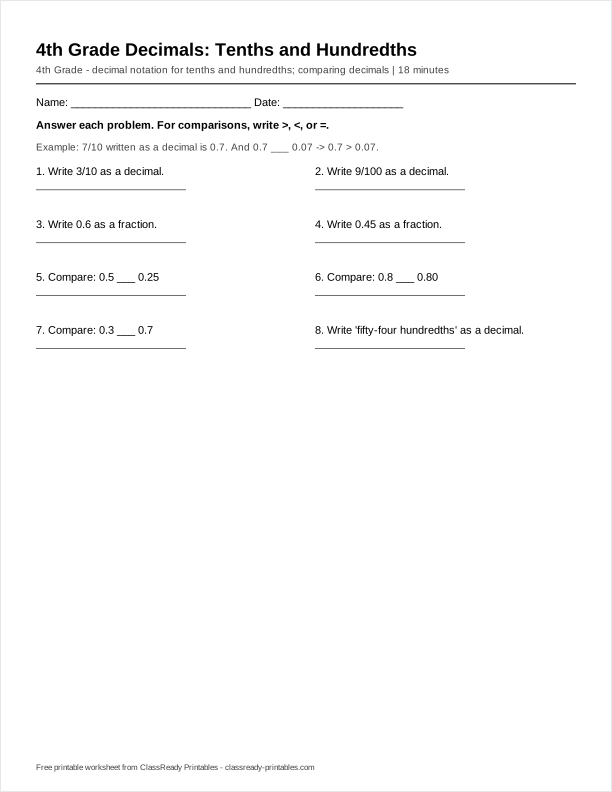
4th Grade Decimals: Tenths and Hundredths
Write tenths and hundredths as decimals and fractions, and compare decimal numbers.
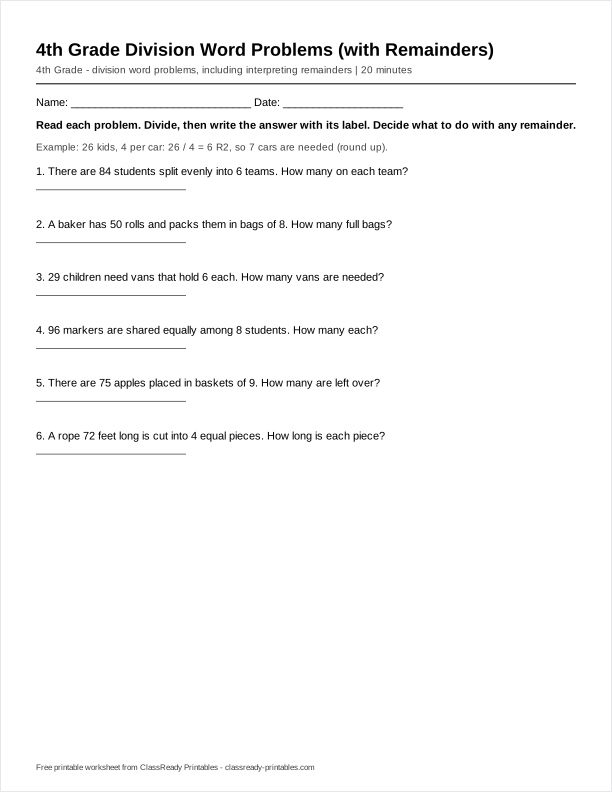
4th Grade Division Word Problems (with Remainders)
Solve division problems and decide what the remainder means — round up, drop it, or report it.
Frequently Asked Questions
Is this worksheet free to download?
Yes. You can download and print this worksheet for free, with no sign-up required.
Does it come with an answer key?
Yes — a complete answer key is included.
Original & reviewed. Every worksheet is created in-house from a grade-level skill brief, checked for a correct answer key, and reviewed for grade-appropriateness. Our editorial policy.